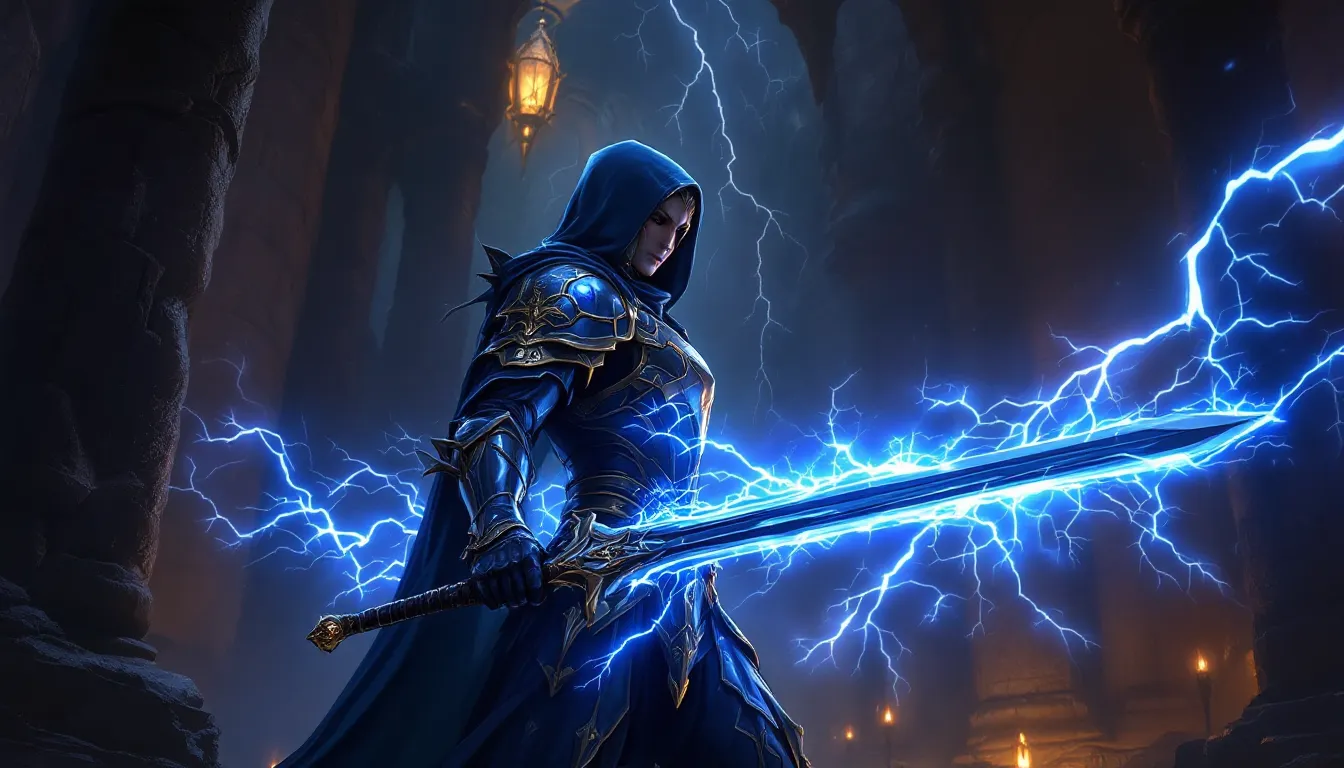
The spellsword is Skyrim’s answer to the age-old question: “Why choose between magic and melee when you can have both?” Wielding a blade in one hand and destructive spells in the other, spellswords carve through Skyrim’s dungeons, bandit camps, and dragon lairs with a versatility that pure mages and warriors can’t match. It’s a playstyle that demands smart resource management and tactical thinking, but rewards players with one of the most satisfying combat loops in the game.
Whether you’re starting a fresh playthrough or respeccing an existing character, building an effective spellsword requires balancing multiple skill trees, choosing the right gear, and understanding when to unleash fire and when to swing steel. This guide covers everything from race selection and perk progression to combat tactics and gear optimization, giving players the knowledge to create a spellsword that dominates from Helgen to Sovngarde.
Table of Contents
ToggleKey Takeaways
- A Skyrim spellsword combines one-handed weapons with destruction magic to achieve versatile combat that adapts to any enemy type without relying solely on pure melee or magic builds.
- Bretons and Dunmer are the top race choices for spellswords, with Bretons offering 25% magic resistance and powerful magic absorption via their Dragonskin racial ability, while Dunmer excel with +10 Destruction bonus and the offensive Ancestor’s Wrath power.
- Prioritize Enchanting to level 100 and acquire the Extra Effect perk to achieve zero-cost destruction spells through dual enchantments of Fortify Destruction and Fortify Magicka Regeneration on multiple gear pieces.
- Invest selectively in One-Handed (Armsman and Fighting Stance perks), Destruction (elemental augmentation perks), and Alteration (armor spells) early, then push Enchanting and Smithing for endgame gear optimization that makes the spellsword build dominant.
- Combat effectiveness improves by opening encounters with ranged destruction spells to control distance, then transitioning to melee weapon strikes once enemies close, while maintaining armor spells like Ebonyflesh for active defense against incoming damage.
What Is a Spellsword in Skyrim?
A spellsword is a hybrid combat class that combines one-handed weapons with destruction magic, typically keeping a sword, axe, or mace in the right hand and a spell in the left. Unlike battlemages who lean heavily into magic with occasional melee, spellswords maintain a near-equal balance between physical and magical damage output.
The core gameplay loop involves switching between melee strikes and spell casting based on enemy type, distance, and resource availability. Against heavily armored foes, a spellsword might open with lightning bolts before closing for sword strikes. Against magic-resistant enemies, the blade takes priority. This adaptability makes spellswords effective in virtually any encounter.
Historically, the spellsword archetype has appeared across The Elder Scrolls series, but Skyrim’s dual-wielding mechanics and perk system make it particularly viable. The build doesn’t require shield blocking or two-handed weapons, freeing up perk points for magic investment while maintaining solid physical DPS.
Why Play a Spellsword Build?
Strengths of the Spellsword Playstyle
Spellswords excel at adaptability. Having both melee and ranged options means never being caught off-guard by enemy resistances or environmental challenges. Dragons circling overhead? Hit them with ice spikes. Draugr rushing down a narrow corridor? Cleave through them with an enchanted blade.
Resource management becomes less punishing compared to pure mage builds. When magicka runs low, the spellsword transitions to melee rather than chugging potions or retreating. This makes sustained dungeon crawls and boss fights more manageable, especially in early-to-mid game before magicka pools grow substantial.
The build also offers excellent scaling potential through enchanting. With proper gear, spellswords can reduce destruction spell costs to zero while maintaining competitive weapon damage, essentially becoming unlimited in both combat modes.
Weaknesses and Challenges to Consider
The biggest challenge is stat distribution. Spellswords need magicka for casting, health for survivability, and at least some stamina for power attacks and sprinting. This three-way split means spellswords won’t match the raw damage output of stealth archers or the tankiness of heavy armor warriors until higher levels.
Perk point starvation hits hard early on. Effective spellswords need investments in One-Handed, Destruction, Alteration (for armor spells), and ideally Enchanting and Smithing for gear optimization. That’s five skill trees competing for limited perks before level 30.
Light armor users also face vulnerability in close combat compared to heavy armor tanks. Without a shield, the spellsword relies on positioning, crowd control spells, and armor spells like Stoneflesh or Ebonyflesh to mitigate damage. Skilled players thrive with this active defense approach, but it’s less forgiving than holding block.
Best Races for a Spellsword Build
Top Race Choices and Their Bonuses
Breton sits at the top for pure optimization. The Dragonskin racial power grants 50% magic absorption for 60 seconds, making them nearly untouchable against magic users. Bretons also start with +10 to Conjuration and +5 to Alteration, Illusion, Restoration, Alchemy, and Speech. That Alteration bonus accelerates access to armor spells, crucial for light armor spellswords. Their innate 25% magic resistance stacks with other sources, reaching the 85% cap more easily than any other race.
Dunmer (Dark Elf) offers the most offensive racial bonuses. Starting with +10 to Destruction and +5 to Alchemy, Alteration, Illusion, Light Armor, and Sneak, Dark Elves are built for the spellsword playstyle. The Ancestor’s Wrath power (dealing fire damage to nearby enemies for 60 seconds) synergizes perfectly with melee range combat. Their 50% fire resistance helps against dragon breath and enemy pyromancers.
High Elf (Altmer) brings the largest starting magicka pool with +50 magicka, plus the Highborn ability that regenerates magicka 25x faster for 60 seconds. This makes them powerhouse casters early game. They start with +10 to Illusion and +5 to Alteration, Conjuration, Destruction, Enchanting, and Restoration, basically every magic school. The tradeoff is no defensive racial power and lower base health.
Alternative Races That Work Well
Nord might seem like an odd pick, but their 50% frost resistance and starting bonuses to Two-Handed, Block, and Light Armor make them surprisingly effective. The Battle Cry power (causing enemies to flee for 30 seconds) provides excellent crowd control when surrounded. Players interested in roleplaying as a Nord warrior who learned magic can thrive with this choice.
Redguard works for stamina-focused variations. Their Adrenaline Rush ability (stamina regenerates 10x faster for 60 seconds) enables aggressive power attack spam. Starting bonuses favor physical combat, but their natural survivability helps overcome the spellsword’s squishiness.
Imperial offers versatility with balanced starting skills and the Voice of the Emperor power (calming nearby people for 60 seconds). Not optimal for pure power, but their Imperial Luck trait (finding more gold) helps fund early spell purchases and gear upgrades.
Essential Skills and Perks for Spellswords
One-Handed Weapon Perks
The One-Handed tree requires selective investment. Armsman (5 ranks, up to 100% damage increase) is mandatory, take all five ranks as they become available. Fighting Stance (+25% attack damage with one-handed weapons when only wielding a one-handed weapon and a spell) is the spellsword-specific perk: grab it at level 20 One-Handed.
Choose a weapon specialization based on preference. Hack and Slash (axes cause bleeding damage), Bone Breaker (maces ignore 75% of armor), and Bladesman (critical hits with swords have a 10% chance to decapitate) all work. Maces are technically optimal against heavily armored enemies, but the difference is marginal. Pick what feels good.
Skip Dual Flurry and Dual Savagery, those perks only work when dual-wielding weapons, not weapon-plus-spell. Savage Strike (standing power attacks with one-handed weapons do 25% bonus damage and have a chance to decapitate) and Critical Charge (sprinting power attacks do double damage) add burst damage for skilled players.
Destruction Magic Perks
Destruction scaling is notoriously weak in vanilla Skyrim, but proper perk investment helps. Novice Destruction through Master Destruction reduce spell costs and enable purchasing higher-tier spells, take them as needed based on your spell choices.
Augmented Flames, Augmented Frost, and Augmented Shock each have two ranks, increasing damage by 25% then 50%. Most spellswords specialize in one element for perk efficiency. Lightning spells have instant travel speed (better for moving targets), fire deals damage-over-time (better DPS against single targets), and frost drains stamina (minimal benefit since you’re not relying on blocking).
Avoid Impact unless running a destruction-heavy variation. The stagger on dual-cast spells is powerful, but spellswords can’t dual-cast while holding a weapon. Intense Flames, Deep Freeze, and Disintegrate (fear/paralyze/disintegrate low-health enemies) offer utility but aren’t essential.
Alteration and Restoration Perks
Alteration is non-negotiable for spellswords not using heavy armor. Novice Alteration through Adept Alteration unlock the armor spells (Oakflesh, Stoneflesh, Ironflesh, Ebonyflesh). Take Mage Armor (2 ranks, armor spells 2x then 3x as strong if not wearing armor) if going unarmored or in robes, though most spellswords wear light armor and skip this.
Magic Resistance (3 ranks, up to 30% magic resistance) stacks with racial bonuses and enchantments, pushing toward the 85% cap. Atronach (30% spell absorption) is powerful at level 100 Alteration but requires heavy investment.
Restoration depends on playstyle. Novice Restoration and Apprentice Restoration enable healing spell purchases. Regeneration makes healing spells 50% more effective, while Recovery doubles magicka regeneration rate. Respite (healing spells restore stamina too) offers excellent utility. For players who prefer comprehensive magic knowledge, investing deeper into Restoration pays dividends.
Supporting Skills: Enchanting and Smithing
Enchanting transforms spellswords from decent to dominant. Enchanter (5 ranks, 100% stronger enchantments) and Insightful Enchanter (skill enchantments 25% stronger) directly boost gear power. The endgame combo involves Extra Effect (can put two enchantments on one item) combined with Fortify Destruction and Fortify Magicka Regeneration on multiple pieces, reducing destruction costs to zero.
Smithing allows upgrading weapons and light armor to legendary quality. Steel Smithing unlocks early upgrades, while Elven Smithing and Glass Smithing open mid-tier light armor options. Arcane Blacksmith (can improve magical weapons and armor) is mandatory for upgrading enchanted gear. Skip the heavy armor side entirely unless planning a hybrid build.
Best Equipment and Gear for Spellswords
Recommended Weapons
Dragonbane (found in Sky Haven Temple during the Blades questline) is perfect for dragon-heavy encounters. Base damage of 14, swings as fast as a sword, and deals 20-40 bonus damage to dragons. The shock damage also works against most other enemies.
Chillrend (obtained during “The Pursuit” quest in Riften) scales with player level. At level 46+, it deals 15 base damage with 30 frost damage and chance to paralyze for 2 seconds. The crowd control synergizes beautifully with spellsword tactics.
Miraak’s Sword (Dragonborn DLC) absorbs 15 stamina from enemies and has a chance to summon a tentacle to poison them. Base damage is only 11, but the unique effect adds utility.
For crafted weapons, enchant with Absorb Health or Absorb Magicka. The former provides sustain in melee, while the latter fuels more spell casting. Chaos Damage (from Dragonborn DLC) adds fire, frost, and shock damage simultaneously, making it one of the highest DPS enchantments available.
Optimal Armor Choices
Glass Armor offers the best protection-to-weight ratio in light armor, with a full set providing 169 armor rating at base. Looks sharp too. Craft and improve it to legendary for maximum defense.
Nightingale Armor (obtained during Thieves Guild questline) provides solid defense plus useful enchantments: frost resistance on the boots, stamina on gloves, and magicka on the hood. The set bonus reduces detection, though spellswords care less about stealth.
The Archmage’s Robes (earned by becoming Archmage of the College of Winterhold) grant 100% magicka regeneration and -15% to all spell costs. Combining these with Morokei (a dragon priest mask granting 100% magicka regeneration) creates a magicka regeneration monster, though at the cost of physical defense.
Mixed sets work well: wear enchanted light armor gloves, boots, and helmet with Archmage’s Robes for balanced defense and casting power. Players experimenting with unique armor combinations can find creative solutions that match their aesthetic preferences.
Essential Enchantments for Gear
Prioritize Fortify Destruction and Fortify Magicka Regeneration on helm, robes/chest, ring, and necklace. With enchanting at 100, the right perks, and fortified enchanting potions, you can achieve 0% destruction spell costs while maintaining solid magicka regen.
Fortify One-Handed goes on gloves, ring, and necklace, boosting melee damage by 40%+ per piece at high enchanting levels. Stacking multiple pieces creates substantial physical DPS.
Resist Magic on a shield (carried for the armor rating, not for blocking) or armor pieces helps reach the 85% cap. Combine with Breton racial bonus and the Magic Resistance alteration perk for near-immunity to magical damage.
Fortify Health and Fortify Magicka enchantments on armor compensate for conservative stat distribution during leveling. An extra 60 health can mean the difference between surviving a power attack and reloading a save.
Combat Tactics and Strategies
Early Game Combat Approach
Levels 1-15 are about survival and resource conservation. Open fights with Flames or Frostbite from range, dealing damage while enemies close distance. When they reach melee, swap to sword strikes, saving magicka for the next group.
Against single tough enemies like bandit chiefs, kite while casting. Backpedal, fire a spell, dodge the power attack, fire another spell, then close for a quick combo before retreating. The hit-and-run approach minimizes damage taken while your limited magicka pool recovers.
Invest early gold into Firebolt or Ice Spike from court wizards. The apprentice-level destruction spells offer significantly better damage-per-magicka than novice spells. Don’t sleep on Lesser Ward, it blocks incoming spells and dragon shouts, keeping you alive against magic-using enemies.
Always carry health potions. Your health pool will be modest, and you can’t block. Spam those potions without shame, this isn’t a tank build.
Mid to Late Game Tactics
Once enchanting reduces destruction costs substantially (levels 20-40), combat shifts to active spell use throughout fights. Open with Fireball or Ice Storm to hit groups, then wade in with your weapon while maintaining a Stoneflesh or Ebonyflesh armor spell.
Dragon fights become a rhythm: ground them with Dragonrend, hit them with high-damage spells like Thunderbolt while they’re landing, then switch to melee when they’re grounded. Keep Close Wounds or Fast Healing ready for when they use breath attacks.
Dungeon crawling turns into a power fantasy. With zero-cost destruction and a legendary-quality weapon, spellswords can handle any encounter type. Draugr death overlords? Lightning staggers them. Dwemer automatons? Fire melts them. Falmer swarms? Ice Storm controls the crowd.
Use Paralyze (Master-level Alteration) for emergency shutdown of dangerous enemies. It’s expensive, but landing it on a charging giant or dragon priest buys several seconds of free damage.
Handling Different Enemy Types
Mages die to aggressive pressure. They can’t cast effectively while getting chopped, so close distance immediately and combo them down. Use Spell Absorption enchantments or the Atronach Stone to turn their spells into free magicka.
Warriors and melee enemies should eat ranged spells before they reach you. Knock them down to half health with magic, then finish in melee. Against shield-users, Thunderbolt and Lightning Storm stagger through blocks.
Dragons require patience. Ground them, then alternate between spell burst and melee combos. Lightning works best due to instant travel time, you can’t miss. Fire offers higher DPS but requires the dragon to stay still.
Dwemer Centurions resist magic heavily. Focus on physical damage, using only lightning spells (they have lower shock resistance). Kite around pillars while landing charged power attacks between their slams. Several resources like Game8 provide detailed enemy resistance tables for optimizing damage types.
Leveling Guide and Stat Distribution
How to Allocate Health, Magicka, and Stamina
The standard split is 2:1 or 3:2 favoring magicka over health, with minimal stamina investment. Every third level-up goes to health, every other goes to magicka. Stamina gets 5-10 total points across the entire playthrough, just enough for comfortable sprinting and occasional power attacks.
Breakpoints matter. Aim for 200+ magicka by level 15 to cast apprentice spells comfortably. By level 30, target 300+ magicka so you can cast Fireball or Ice Storm multiple times per fight. Once enchanting hits 100 and you’re wearing zero-cost destruction gear, magicka becomes less critical, redirect future points to health.
End-game stats (level 50+) should look something like 300-400 health, 250-350 magicka, and 125-150 stamina. The exact mix depends on enchantment quality and playstyle aggression. Defensive players lean health: offensive casters push magicka.
Efficient Leveling Path from 1-50+
Levels 1-10: Focus on One-Handed and Destruction equally. Kill everything with a mix of spells and sword to level both. Pick up every filled soul gem and learn the Soul Trap spell, start enchanting immediately for faster skill growth.
Levels 10-20: Add Smithing into the rotation. Craft iron daggers or leather bracers (post-patch, improvement matters more than quantity) and improve them. Enchant everything you make, even if you’re just going to sell it. This triple-leveling (Smithing, Enchanting, Speech from selling) accelerates overall progression.
Levels 20-35: By now, your core combat skills are shaping up. Push Enchanting to 100 to unlock Extra Effect. Farm soul gems aggressively, buy filled gems from court wizards, use Soul Trap on everything, and clear Nordic ruins for abundant soul gem drops. Craft your endgame gear with double enchantments.
Levels 35-50+: Round out supporting skills. Max Smithing and improve all your gear to legendary. Invest spare perks into Restoration for better healing, or grab utility perks like Quiet Casting in Illusion (all spells are silent) if you dabble in stealth.
Don’t neglect Alteration leveling, cast Transmute (turns iron ore into gold) repeatedly while walking between locations. It levels Alteration quickly and generates valuable gold ore for jewelry crafting. Many players looking for enhanced spellcasting experiences find that mastering vanilla systems first provides the best foundation.
Best Spells for the Spellsword Build
Offensive Spells to Prioritize
Firebolt and Fireball dominate the early-to-mid game. Firebolt (Apprentice) deals solid single-target damage at reasonable magicka cost. Fireball (Adept) hits an area, perfect for grouped enemies in dungeons. The damage-over-time from fire spells adds extra DPS even after you close to melee.
Ice Spike and Ice Storm offer crowd control through stamina drain and slowing effects. Ice Spike (Apprentice) staggers targets reliably, while Ice Storm (Expert) creates a lingering AoE hazard. Excellent for controlling choke points in Nordic ruins.
Thunderbolt and Lightning Storm provide instant-hit accuracy. Thunderbolt (Adept) is the go-to ranged spell for moving targets like dragons and fleeing enemies. Lightning Storm (Master) is overkill for most situations but deals the highest sustained DPS in the Destruction school, channel it into dragon priests and watch them melt.
Chain Lightning (Expert) bounces between targets, making it ideal for multiple enemy encounters. Less damage per hit than Thunderbolt, but superior total damage when facing 3+ enemies.
Avoid the Cloak spells (Flame Cloak, Frost Cloak, Lightning Cloak). They require close proximity to deal damage, which your melee weapon already handles better. The magicka is better spent on ranged burst.
Defensive and Utility Spells
Stoneflesh, Ironflesh, and Ebonyflesh are mandatory armor spells. Cast before entering combat for 60 seconds of damage reduction. Ebonyflesh grants 100 armor rating at base, which is the difference between getting two-shot and surviving long enough to heal.
Close Wounds and Fast Healing keep you alive. Close Wounds (Adept) is more magicka-efficient for emergency healing during combat. Keep it hotkeyed. Healing Hands works if running with followers, though the healing-over-time is slow.
Paralyze (Master Alteration) and Mayhem (Master Illusion) are luxury spells for players who invest heavily in secondary magic schools. Paralyze completely disables tough enemies for 10 seconds. Mayhem causes everyone in a huge radius to attack each other, cast it on a bandit camp, sit back with a bowl of sweetrolls, and watch the chaos.
Telekinesis serves a niche purpose: leveling Alteration quickly. Hold an object with Telekinesis, fast-travel across the map, and gain instant Alteration levels. It’s borderline exploit territory but entirely legal within game mechanics. Guides on Twinfinite often detail this power-leveling trick for players looking to max Alteration fast.
Standing Stones, Shouts, and Blessings
Best Standing Stones for Spellswords
The Mage Stone (+20% magicka regeneration and learn all magic skills 20% faster) is the starting choice. Activate it immediately after Helgen to speed up Destruction, Alteration, Restoration, and Enchanting progression. Swap out around level 20-25 once core skills are established.
The Atronach Stone (50 extra magicka, +50% spell absorption, -50% magicka regeneration) becomes the endgame choice for experienced players. The spell absorption effectively grants 50% immunity to magic (absorbing spells as magicka instead of taking damage), and the regeneration penalty is negated by enchanted gear providing magicka regen and cost reduction. The 50 bonus magicka equals 5 level-ups worth of stat points.
The Lord Stone (+50 damage resistance, +25% magic resistance) works for players prioritizing survivability over casting power. The magic resistance stacks toward the 85% cap, and the physical damage reduction applies to all physical hits. Less popular than Atronach but viable for players struggling with defense. Those exploring different Stone combinations can test various playstyle adjustments.
The Apprentice Stone (+100% magicka regeneration, +100% weakness to magic) is a trap. The regeneration is nice, but doubling magic damage taken is suicidal. Avoid it.
Most Useful Dragon Shouts
Dragonrend (Joor Zah Frul) forces dragons to land, making them vulnerable to melee. Essential for dragon hunting. Learned automatically during the main quest.
Become Ethereal (Feim Zii Gron) grants 13 seconds of invulnerability at full power. Use it to safely cast expensive spells like Lightning Storm without interruption, escape when surrounded, or cliff-dive without fall damage. One of the most versatile shouts in the game.
Slow Time (Tiid Klo Ul) slows time by 90% for 16 seconds at full power. Pop it during tough fights to land free hits while enemies move at 10% speed. Feels like cheating. It basically is.
Fire Breath (Yol Toor Shul) deals solid fire damage in a cone. Redundant if your Destruction already specializes in fire, but useful as a no-magicka damage option when resources run dry.
Whirlwind Sprint (Wuld Nah Kest) closes distance instantly or creates space for kiting. Use it to charge mages before they complete casting or retreat from berserker rushes. Underrated utility shout.
Marked for Death (Krii Lun Aus) reduces enemy armor and health, stacking with each shout. Against heavily armored targets like Dwarven Centurions or high-level Draugr, three stacked shouts make them melt to both physical and magical damage. The duration is ridiculously long (60 seconds), so it stays active through entire encounters.
Roleplaying Tips and Character Backstory Ideas
Spellswords fit naturally into several roleplay archetypes. The Battlemage Scholar approaches combat as applied magical research, testing theories about elemental weaknesses while perfecting blade technique. This character joins the College of Winterhold early, completes the entire questline, and obsessively collects spell tomes.
The Rogue Spellblade combines light armor, stealth, and magic for a shadowy operative feel. This character works with the Thieves Guild and Dark Brotherhood, using illusion magic and enchanted daggers for silent kills, but isn’t afraid of direct confrontation when necessary. Specialize in frost magic to drain enemy stamina and slow pursuers.
The Honorable Knight variant wears enchanted elven or glass armor, follows a strict moral code, and views magic as a tool for protecting the innocent. Join the Companions (ignore the werewolf stuff if it conflicts with your code), complete the main quest, and hunt dragons to defend Skyrim’s people. Focus on restoration and protective alteration spells.
The Daedric Enforcer serves a specific Daedric Prince, Mehrunes Dagon for fire destruction, Meridia for lightning, Molag Bal for frost. Complete that Prince’s quest early, use their artifact weapon if viable, and roleplay as their mortal agent spreading their influence across Skyrim.
Dark Elf Refugee works perfectly for Dunmer players. Your family fled Morrowind after the Red Year, carrying ancient traditions of combining sword and sorcery. You arrive in Skyrim seeking a new home and find yourself caught in a civil war. Side with the Empire (they’re more accepting of non-Nords) and build a homestead through the Hearthfire DLC.
Think about spell choices reflecting personality. An aggressive character spams fire magic and charges enemies. A tactical character uses ice to control space and pick apart groups methodically. A pragmatic character uses whichever element exploits the current enemy’s weakness.
Give your character a signature move, maybe they always open combat with Chain Lightning, or perhaps they never kill with magic, only weaken enemies before executing them with the blade. Small touches like this create memorable moments during hundreds of hours of gameplay. For players invested in deeper lore integration, consider how your character’s faith shapes their magical philosophy and combat approach.
Conclusion
The spellsword stands as one of Skyrim’s most rewarding builds, demanding thoughtful character development but delivering unmatched tactical flexibility. From the opening escape at Helgen to the final confrontation with Alduin, balancing steel and sorcery creates a playstyle that stays engaging across hundreds of hours.
Success comes down to smart perk allocation, proper gear enchantments, and combat awareness. Invest in your core skills early, push Enchanting to 100 for zero-cost destruction, and craft legendary-quality equipment. Master the rhythm of ranged spell openers transitioning into melee combos, and no enemy type will pose a consistent threat.
Whether you’re drawn to the raw power of a High Elf pyromancer, the balanced resilience of a Breton battlemage, or the thematic appeal of a Nord who studied at the College, the spellsword archetype offers room for personal expression while maintaining mechanical effectiveness. The build scales beautifully into late game, handles all content types, and never falls into the repetitive patterns that plague pure archer or stealth builds.
Now grab your enchanted blade, prepare your favorite destruction spell, and show Skyrim what happens when magic and steel unite. The dragons won’t know what hit them.