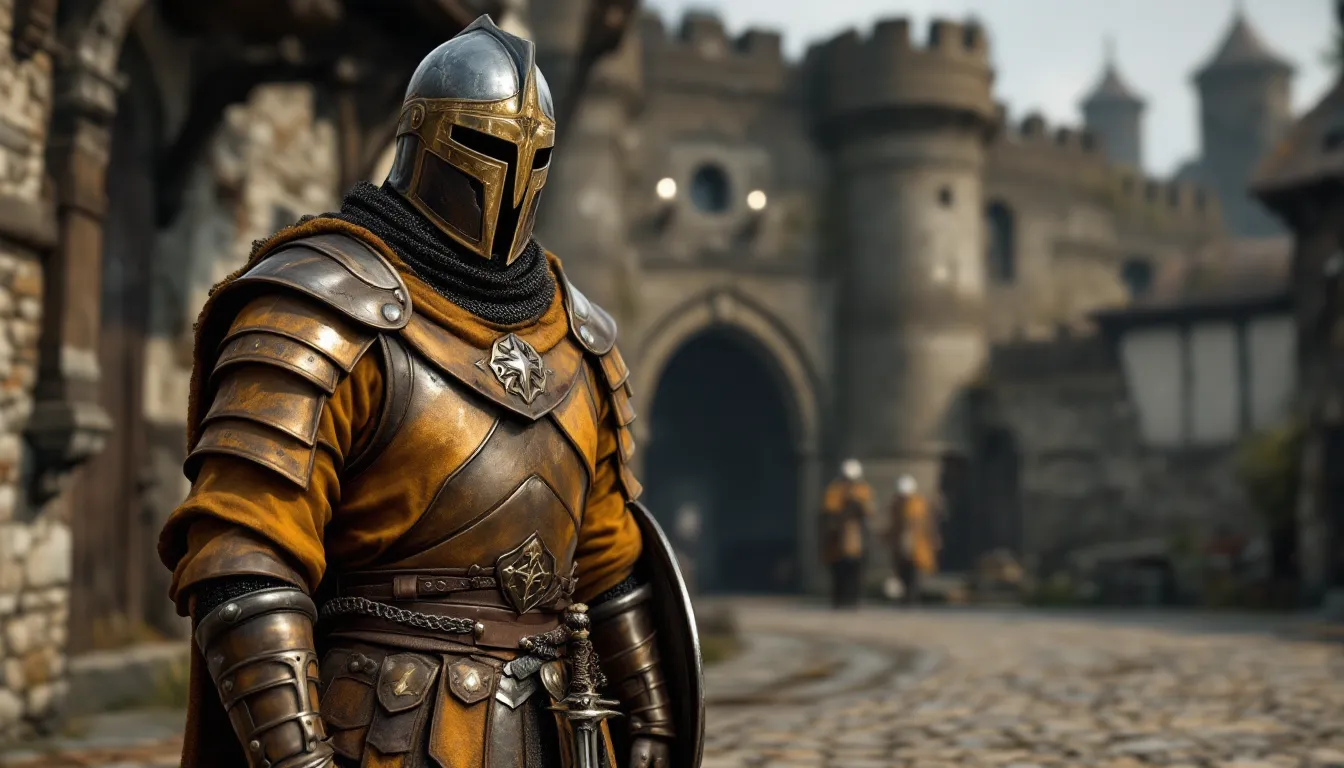
If you’ve spent any time wandering the frozen tundra of Skyrim, you’ve crossed paths with its guards. They’re everywhere, patrolling city streets, manning gates, and somehow always knowing you stole that sweetroll. But Skyrim guards are more than just law enforcement NPCs. They’ve become cultural icons, spawning memes that have outlived entire gaming generations and serving as the backbone of the game’s crime and combat systems.
Whether you’re trying to sneak past them, fight your way out of a bounty, or just wondering why they all have knee injuries, this guide breaks down everything about Skyrim’s most recognizable NPCs. From their dialogue quirks to combat scaling, crime detection mechanics to lore significance, we’re covering it all.
Table of Contents
ToggleKey Takeaways
- Skyrim guards operate on a witness-based crime detection system where actions only become criminal if an NPC witnesses them, allowing skilled players to avoid bounties through stealth and careful planning.
- Each of Skyrim’s nine holds employs guards with unique armor colors and hold-specific dialogue, with allegiance changing based on Civil War outcomes and extending to how guards reference political shifts.
- The iconic “I used to be an adventurer like you, then I took an arrow in the knee” line became a gaming meme due to repetition and oddly specific phrasing, transcending Skyrim to appear in mainstream media.
- Bounty levels scale based on crime severity (1-999 gold for minor crimes, 3,000+ gold for major sprees), and guards of the same Civil War faction share information across holds.
- Joining the Thieves Guild provides significant anti-guard benefits including bribe options, half-price bounty clearing, and the Shadowcloak of Nocturnal invisibility power that makes extended criminal activities manageable.
- Skyrim guards use level-scaling mechanics that make them grow stronger as players level up, with health ranging from 50 HP at level 1 to 450+ HP at level 50+, creating evolving combat challenges.
Who Are the Skyrim Guards?
The Role and Function of Guards in Skyrim
Guards are the enforcers of law and order across Skyrim’s nine holds. They patrol cities, towns, and strategic locations like bridges and watchtowers. Their primary functions include:
- Crime enforcement: Detecting and responding to criminal acts committed by the player or NPCs
- Combat support: Engaging hostile creatures and enemies during attacks
- Dialogue providers: Offering rumors, directions, and contextual comments about ongoing quests
- Atmospheric presence: Reinforcing the lived-in feel of each hold through patrol routes and ambient dialogue
Unlike many RPG guards who stand idle, Skyrim’s guards have daily routines. They change shifts, walk set patrol paths, and react dynamically to events like dragon attacks or vampire invasions (added in the Dawnguard DLC). They’re essential to the game’s immersion, even if their AI can be exploited.
Different Hold Guards and Their Territories
Each of Skyrim’s nine holds employs its own guard force, distinguished by unique armor colors and hold-specific dialogue. Here’s the breakdown:
- Whiterun Hold: Yellow and brown armor. These guards are among the most frequently encountered since Whiterun serves as a central hub early in the game.
- Solitude (Haafingar): Red and silver armor. Elite guards befitting the capital of Skyrim.
- Windhelm (Eastmarch): Blue-gray armor with bear motifs. Guards here reflect Ulfric’s Stormcloak allegiance.
- Riften (The Rift): Orange-red armor. Notoriously corrupt, with many on the Black-Briar family payroll.
- Markarth (The Reach): Silver armor with unique helmets. Guard the most crime-ridden city in Skyrim.
- Falkreath Hold: Green and brown armor. Patrol the dense forests near the Cyrodiil border.
- Morthal (Hjaalmarch): Dark gray armor. Smallest guard force due to Morthal’s tiny population.
- Dawnstar (The Pale): White and gray armor. Hardy guards suited to the harsh northern climate.
- Winterhold Hold: Blue armor. Skeleton crew guarding what’s left of the once-great city.
Guard allegiance changes based on Civil War outcomes. If the Stormcloaks take Solitude, for example, you’ll see Stormcloak guards replace Imperial ones. This extends to dialogue, guards will reference the new Jarl and comment on political shifts.
The Most Memorable Guard Quotes and Why They Became Memes
“I Used to Be an Adventurer Like You…”
The granddaddy of Skyrim memes. The full line, “I used to be an adventurer like you, then I took an arrow in the knee”, has transcended the game itself, appearing in everything from internet forums to mainstream media. But why did this particular line blow up?
First, repetition. Every guard in every hold can deliver this line randomly, meaning players heard it constantly during their playthroughs. Second, the phrasing is oddly specific and darkly comedic. It implies every single guard in Skyrim suffered the exact same career-ending knee injury, turning a throwaway line into an absurdist running gag.
The meme peaked around 2011-2012, with countless variations (“I used to write good tweets like you, then I took an arrow in the knee”). While it’s died down since then, it remains the most recognizable Skyrim quote outside the “Fus Ro Dah” shout. Some players have theorized “arrow in the knee” is Nordic slang for getting married, but there’s no evidence Bethesda intended that meaning.
Other Iconic Guard Dialogue Lines
Guards deliver dozens of context-sensitive and randomized lines. Here are the standouts:
- “No lollygaggin’.” A seemingly pointless warning that became shorthand for Skyrim’s sometimes awkward dialogue.
- “Let me guess, someone stole your sweetroll?” A callback to earlier Elder Scrolls games where sweetroll theft was a character background question.
- “Wait… I know you.” The dreaded line that signals your disguise didn’t work or your bounty’s been discovered.
- “Psst. I know who you are. Hail Sithis.” Guards who are secretly Dark Brotherhood sympathizers whisper this if you’ve completed the Brotherhood questline.
- “My cousin’s out fighting dragons, and what do I get? Guard duty.” Peak guard envy, especially funny when delivered during a dragon attack.
- “Iron sword, huh? What are you killing, butterflies?” Guards mock low-level weapons, but get respectful if you’re wielding endgame gear.
These lines contribute to the game’s personality. They’re not deep writing, but they’re memorable and reactive enough to make guards feel like part of Skyrim’s world rather than static obstacles.
How Skyrim Guards Detect Crime and Respond to Players
The Crime Detection System Explained
Skyrim’s crime system operates on a witness-based detection model. An action is only criminal if an NPC sees it and reports it. Here’s how it works:
Line-of-sight detection: Guards and citizens must have direct visual contact with your criminal act. If you pickpocket someone with no witnesses around, there’s no crime. If a guard sees you, instant bounty.
Detection chance: Stealth skill and visibility affect detection probability. A master thief crouched in shadows has a much lower chance of being spotted mid-crime than a heavily armored warrior standing in daylight.
Witness reporting: Civilians who spot crimes will flee and attempt to report to the nearest guard. If you kill the witness before they report, no bounty is applied. This creates a dark but effective crime management strategy.
Non-hostile witnesses: Some NPCs, like beggars or certain quest-related characters, won’t report crimes. Others, like character builds optimized for specific playstyles, can exploit these mechanics.
Guards have enhanced detection ranges compared to civilians. They’ll notice drawn weapons in cities, aggressive behavior, and transformation (werewolf or Vampire Lord forms trigger instant hostility). Certain actions, like killing chickens, count as crimes, yes, Skyrim’s chickens are legally protected property.
Bounty Levels and Guard Aggression
Bounties scale based on crime severity and accumulate across each hold. Here’s the breakdown:
- 1-999 gold: Minor crimes (assault, petty theft, trespassing). Guards will attempt arrest but won’t chase far.
- 1,000-2,999 gold: Serious crimes (murder, grand theft, repeated offenses). Guards become more aggressive and pursue longer.
- 3,000+ gold: Major crime spree. Guards attack on sight in some cases, and you may face multiple guards at once.
Each hold tracks bounties independently. A 5,000-gold bounty in Markarth means nothing to Whiterun guards. But, guards of the same Civil War faction share information, Imperial holds communicate with each other, as do Stormcloak holds.
Guards use a three-stage response system:
- Warning: “Stop right there, criminal scum.” (wait, wrong game). Guards demand you halt.
- Arrest attempt: If you don’t submit, they’ll pull weapons and approach.
- Combat: Refuse arrest or attack, and they’ll try to kill you. More guards will join the fight as reinforcements.
Dealing with Guards: Payment, Jail, and Fighting Your Way Out
Paying Your Bounty
The cleanest solution if you have the gold. When stopped by a guard, select the payment option and your bounty is cleared immediately. You’ll lose gold equal to the bounty amount, but keep all your stolen goods and skill progress.
Speech perks can reduce this cost. The Persuasion perk line allows you to occasionally persuade guards to overlook minor crimes (bounties under 100 gold) or reduce the fine. Higher Speech skill increases success chance. If you’re in the Thieves Guild and have completed enough special jobs to gain influence in that hold, guards offer a special dialogue option to clear bounties for half price.
One quirk: if your bounty exceeds your available gold, guards won’t accept partial payment. You’ll need to choose jail or combat instead.
Serving Jail Time and Its Consequences
Choosing jail clears your bounty without spending gold, but comes with drawbacks:
Skill loss: You’ll lose progress in several skills based on jail time served. The loss is typically 1-2 levels’ worth of XP across multiple skills. Skills that are actively leveled (like those you’ve been using recently) take the biggest hit.
Time passage: Days pass while imprisoned, potentially affecting time-sensitive quests. Most quests don’t fail, but the time skip can feel jarring.
Stolen goods confiscated: All items marked “stolen” are removed from your inventory and placed in an evidence chest. You can break out and recover them from the jail’s evidence chest, but that requires lockpicking or pickpocketing the key.
Escape options: Every jail has an escape route, unlocked doors, loose walls, or lockpickable gates. If you break out before your sentence is up, your bounty is reinstated. Players often serve jail time, immediately break out, and reclaim their stolen goods, which is basically gaming the system. Experienced players have turned jailbreaking into a minigame, with many walkthroughs and detailed guides explaining optimal escape routes for each hold.
Resisting Arrest and Combat Tactics
Fighting guards is viable but risky. Here’s what you’re up against:
Guards scale with your level, so low-level characters will get destroyed. At higher levels, you can win but face endless reinforcements. Kill one guard, two more show up. The game spawns guards continuously until you flee, pay, or die.
Effective combat strategies:
- Shouts: Unrelenting Force can knock guards down, giving you time to escape. Become Ethereal makes you invincible for a few seconds, perfect for running past guard clusters.
- Stealth archer: Classic Skyrim. Break line of sight, hide, wait for guards to stop searching, then pick them off from stealth.
- Atronachs and summons: Conjured creatures tank damage while you focus down individual guards.
- Door exploits: Guards won’t follow through certain loading zones. Duck into a house, wait, and they’ll reset outside.
Killing guards adds to your bounty exponentially. Each guard death is typically a 1,000-gold murder charge. Fight through a squad of five guards and you’re looking at 5,000+ gold in added bounty. At that point, it’s usually cheaper to reload a save.
Guard Combat Abilities and Difficulty Scaling
Equipment and Armor Variations
Guards wear hold-specific armor sets that scale with player level. Here’s the progression:
Levels 1-19: Guards wear hide armor or light guard armor, with iron weapons. They’re pushovers at this stage, a few hits from any weapon drops them.
Levels 20-29: Guards upgrade to steel armor or improved guard armor variants, with steel weapons. Moderate threat, especially in groups.
Levels 30+: Guards wear steel plate armor or hold-specific heavy armor, wielding steel or orcish weapons. High armor rating and damage output make them legitimate threats.
Some guards carry bows and switch to ranged combat if you create distance. Guards also use shields, blocking your attacks and sometimes performing bash interrupts that stagger you mid-swing. Shield bashes are particularly annoying for magic users, guards will close distance and bash to interrupt spellcasting.
Special guards exist in certain locations. Imperial Soldiers and Stormcloak Soldiers encountered during the Civil War have slightly different stats and equipment than city guards. The Penitus Oculatus (Emperor’s bodyguards) are significantly tougher, with higher health pools and better gear.
How Guard Strength Scales with Player Level
Guards use Skyrim’s level-scaling system, meaning they grow stronger as you do. Their stats scale as follows:
- Health: Ranges from around 50 HP at level 1 to 450+ HP at level 50+.
- Stamina: Scales similarly, affecting their power attack frequency and sprint duration.
- Damage: Base weapon damage plus scaling modifiers. High-level guards hit hard, two-handed weapon guards can chunk 30-40% of your HP in one swing on higher difficulties.
Guards have access to perks. They use power attacks, shield bashing, and occasionally disarm shouts (though this is rare). Their AI prioritizes aggression, they’ll push forward rather than kite, making them predictable but relentless.
One notable quirk: guards have infinite reinforcements in most holds. The game’s radiant system continuously spawns new guards during prolonged combat. This makes “fighting the entire city” functionally impossible, you’ll eventually get overwhelmed or run out of resources. Speedrunners and challenge runners exploit this by using specific mechanics tied to different races for their unique abilities and resistances during guard combat scenarios.
Exploits, Glitches, and Funny Guard Behaviors
Common Guard AI Quirks
Skyrim’s guards are prone to bizarre AI behaviors that range from hilarious to exploitable:
Pathfinding failures: Guards sometimes get stuck on terrain, walking into walls or endlessly trying to climb obstacles. This is especially common in Markarth’s vertical city layout.
Selective memory: Commit a crime, break line of sight, and wait. After a few minutes, guards forget you existed. They’ll literally say “Must have been the wind” while standing next to a dozen corpses.
Inappropriate dialogue: Guards deliver situational dialogue at the worst times. Expect a guard to critique your iron sword while a dragon incinerates the city, or to ask about the Cloud District during a vampire attack.
Animal witnesses: Chickens and horses count as crime witnesses. Kill someone in front of a horse, and the horse will somehow telepathically alert the guards. It’s become a running joke in the community.
Dead guard commentary: Other guards will comment on your criminal acts even if you killed all the witnesses. The game sometimes spawns a new guard with knowledge of your crimes, breaking the witness system’s logic.
Popular Exploits Involving Guards
Bucket/basket head: Place a bucket or basket on a guard’s head to block their vision. They can’t see you commit crimes while wearing it. This shouldn’t work, but Skyrim’s detection system is literal, no line of sight means no crime. It’s absurd and it works.
Calm spell loophole: Cast Calm on a hostile guard, immediately sheath your weapon, and they’ll forget combat entirely. You can repeat this indefinitely to neutralize entire guard forces without killing them.
Evidence chest exploits: After being jailed, break out and loot the evidence chest. If you’re not caught stealing from it (use invisibility or stealth), you recover all stolen goods with no bounty added. Some players chain this, commit crimes, go to jail, break out, repeat.
Guard baiting for training: Certain trainers become hostile if you attack them. Attack, train up to five times, then yield to stop combat. Guards don’t always aggro if you yield quickly, letting you abuse training limits.
Bounty hopping: Bounties are hold-specific. Commit crimes in one hold, fast travel to another, and you’re safe. Guards in neutral territory won’t arrest you for crimes committed elsewhere unless they share faction allegiance. The community often shares these exploits through platforms like modding communities, where tweaks and fixes are frequently discussed.
Guards in Skyrim Lore and The Elder Scrolls Universe
Guards aren’t just gameplay mechanics, they have lore significance in The Elder Scrolls universe. Each hold’s guards represent that region’s political structure, military capacity, and cultural identity.
Historically, city guards in Tamriel serve under the local Jarl or ruler, functioning as both police force and militia. In Skyrim, this dual role is especially important given the Civil War. Guards aren’t professional soldiers: they’re conscripts, volunteers, and career enforcers who transition between peacekeeping and warfare depending on the hold’s needs.
The Imperial Legion influence is evident in holds like Solitude and Falkreath, where guard armor and training reflect Imperial military standards. Conversely, Stormcloak-aligned holds like Windhelm emphasize Nord traditionalism, guards here are more individualistic and less standardized in equipment.
Lore-wise, the “arrow in the knee” line has sparked debate. Some theorize it’s a literal reference, guards are former adventurers who suffered crippling injuries. Others suggest it’s metaphorical, representing the transition from adventurous youth to settled life (possibly marriage or family obligations). Bethesda has never confirmed either interpretation, keeping it ambiguous.
Guards also react to major questlines. Complete the Dark Brotherhood and guards whisper Sithis blessings. Become a Thane and guards address you with respect. Join the Companions and guards comment on your werewolf nature (if they suspect it). Become Arch-Mage of the College of Winterhold and guards acknowledge your position. This reactivity, while limited, reinforces the player’s impact on the world.
One interesting detail: guards recognize elite groups like the Blades, referencing them in dialogue if the player progresses through the main quest, showing how deeply interconnected Skyrim’s factions are.
Tips for Avoiding and Manipulating Guards
Using Stealth and Invisibility
Stealth builds have natural advantages against guards. Maxing Sneak to 100 and taking the Shadow Warrior perk (crouch to become invisible during combat) makes it trivially easy to escape guard aggro. Here’s the stealth approach:
Pre-crime prep: Survey the area. Identify guard positions, patrol routes, and witness locations. Commit crimes when guards are far away or facing other directions.
Invisibility potions/spells: Chug an invisibility potion or cast Invisibility before committing crimes. The effect breaks when you act, but you can immediately reapply it after pickpocketing or attacking. Guards can’t report crimes if they can’t see you.
Muffle enchantments: Reduce detection range significantly. Combine with Sneak skill for near-perfect crime execution.
Kill, hide, wait: Murder a target, drag the body somewhere hidden (yes, you can move corpses), then wait an hour. Guards will investigate but find nothing, eventually giving up.
Shadow Stone: The Shadow Stone standing stone grants a once-per-day invisibility power. Free escape button if caught.
Stealth archers rarely deal with guards because they rarely get caught. One-shot sneak attacks from range eliminate witnesses before they can report.
The Thieves Guild and Guard Immunity Perks
Joining the Thieves Guild offers significant anti-guard benefits:
Bribe guards: Thieves Guild membership unlocks dialogue options to bribe guards. Costs vary but are typically less than the bounty itself.
Half-price bounty clearing: After completing enough radiant quests to gain influence in a hold, Thieves Guild members can pay half the normal bounty amount. This influence is granted in Whiterun, Windhelm, Markarth, and Solitude after completing four special jobs per city.
Fence access: Fences buy stolen goods without question, eliminating the “stolen” tag. Removing this tag makes items non-confiscatable if you’re arrested later.
Shadowcloak of Nocturnal: Completing the Thieves Guild questline grants a once-per-day power that renders you invisible for 120 seconds. Combines with stealth perks for undetectable crime sprees.
For players planning extended criminal activities, the Thieves Guild path is essential. It transforms guards from threats into minor inconveniences. If you’re exploring dangerous locations like ancient Nordic ruins, having a clean slate with guards in nearby holds ensures smooth travel between dungeons and cities.
Conclusion
Skyrim guards are more than background NPCs, they’re the connective tissue that holds the game’s crime, combat, and immersion systems together. From their meme-worthy dialogue to their surprisingly deep crime detection mechanics, they’ve earned their place as some of gaming’s most iconic non-playable characters.
Whether you’re paying bounties, exploiting AI quirks, or fighting your way through entire city garrisons, understanding how guards work gives you control over one of Skyrim’s most persistent systems. They scale with you, react to your achievements, and will absolutely chase you across the province if you steal that sweetroll.
Eleven years after Skyrim’s original release in 2011, guards remain a testament to Bethesda’s world-building. They’re flawed, funny, and occasionally frustrating, but somehow, they’re exactly what Skyrim needs. Just don’t ask them about their knees.