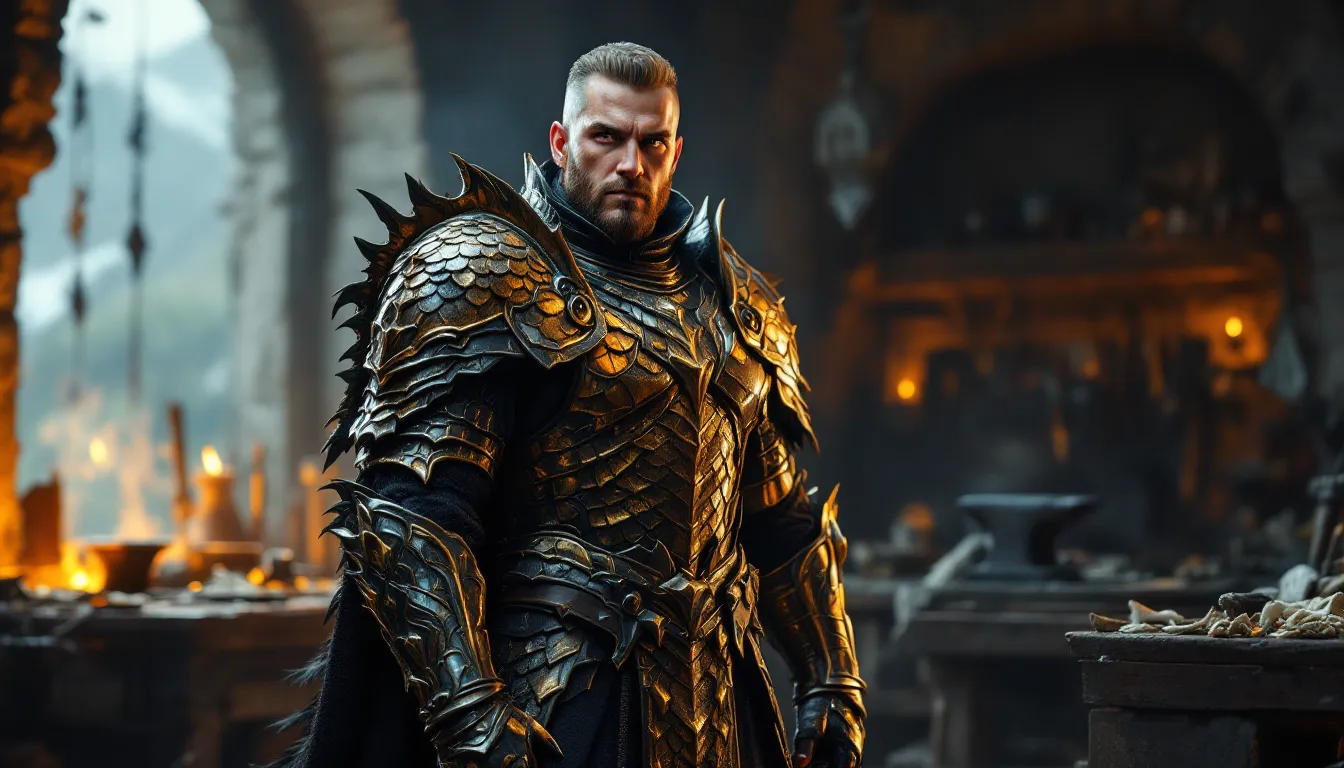
In Skyrim’s endgame, there’s a certain satisfaction that comes from wearing armor forged from the very beasts that once terrorized the countryside. Dragon armor, whether you’re talking about the heavy-hitting Dragonplate or the DLC-exclusive Dragonbone set, represents the pinnacle of smithing mastery and a badge of honor for any Dragonborn who’s serious about armor rating. These sets aren’t just about aesthetics (though they do look undeniably badass): they offer some of the highest base defense values in the game, making them essential for players tackling Legendary difficulty or min-maxing their builds.
But crafting dragon armor isn’t as simple as killing a few dragons and hitting an anvil. You’ll need serious Smithing investment, a mountain of materials, and a solid understanding of which set suits your playstyle. This guide walks through everything: the differences between Dragonplate and Dragonbone armor, the exact prerequisites and material counts, efficient dragon farming routes, crafting optimization with Fortify Smithing potions, and how these legendary sets stack up against other top-tier options like Daedric. Whether you’re a heavy armor tank or just want the bragging rights of wearing dragon scales, here’s how to get geared up.
Table of Contents
ToggleKey Takeaways
- Dragon armor in Skyrim represents the pinnacle of endgame heavy armor, with Dragonplate and Dragonbone sets offering armor ratings of 136–138 base and the ability to exceed the 567 armor cap when properly tempered and perked.
- Crafting dragon armor requires Smithing level 100, the Dragon Armor perk, and significant material farming: approximately 30–40 Dragon Bones and 20–30 Dragon Scales for a full set, obtainable through hunting at fixed spawn locations like Shearpoint and Ancient’s Ascent.
- Stacking Fortify Smithing potions and enchantments can yield +100% or more improvement bonus, making it crucial to reach Legendary quality tempering and maximize your dragon armor’s base protection.
- Dragonbone armor (Dawnguard DLC) is bone-intensive with superior aesthetics, while Dragonplate leans on scales and is available in the base game; both sets are lighter and more practical than Daedric armor despite comparable stats.
- Dragon armor excels for heavy armor tanks, Legendary difficulty players, and hybrid melee builds, but stealth archers, pure mages, and werewolves should prioritize alternative gear suited to their playstyle.
- Enchanting your dragon armor with Fortify Health, Fortify Heavy Armor, Resist Magic, or Fortify Stamina allows you to tailor protection to your build and unlock synergies that elevate your combat effectiveness beyond raw armor ratings.
Understanding Dragon Armor: Dragonplate vs. Dragonbone Explained
Skyrim offers two distinct dragon-themed armor sets, and knowing the difference is crucial before you start hoarding materials. Both sets sit at the top of the armor rating food chain, but they have different requirements, appearances, and, most importantly, availability.
Dragonplate Armor: The Heavy Armor Champion
Dragonplate armor is the base game’s ultimate heavy armor set, available to all players regardless of DLC ownership. Crafted primarily from Dragon Scales and Dragon Bones, this armor set provides exceptional protection with a full set base armor rating of 136 (untempered). Each piece requires Smithing level 100 and the Dragon Armor perk, which sits at the very top of the heavy armor branch of the Smithing tree.
The full Dragonplate set includes:
- Dragonplate Helmet
- Dragonplate Armor (chest piece)
- Dragonplate Gauntlets
- Dragonplate Boots
- Dragonplate Shield
Visually, Dragonplate has a distinctive gold-and-scale aesthetic that screams “I hunt dragons for breakfast.” The armor emphasizes Dragon Scales in its construction, though you’ll still need a healthy supply of bones for certain pieces. It’s worth noting that Dragonplate is strictly heavy armor, there’s no light armor equivalent in the base game.
Dragonbone Armor: The Dawnguard Alternative
Introduced with the Dawnguard DLC, dragonbone armor skyrim takes things a step further. This set uses significantly more Dragon Bones in its crafting recipes and offers marginally higher armor ratings than Dragonplate, a full set provides 138 base armor rating (untempered), making it technically the highest-rated heavy armor in the game.
The Dragonbone set mirrors Dragonplate in piece count:
- Dragonbone Helmet
- Dragonbone Armor
- Dragonbone Gauntlets
- Dragonbone Boots
- Dragonbone Shield
Aesthetically, Dragonbone has a more skeletal, bone-forward appearance that some players prefer for its darker, more menacing look. The crafting requirements are nearly identical to Dragonplate (Smithing 100, Dragon Armor perk), but the material composition shifts heavily toward bones rather than scales.
One critical distinction: Dragonbone weapons are also part of the Dawnguard DLC and are among the highest base-damage weapons in the game, making the bone investment worthwhile if you’re building a melee character. The armor and weapon synergy makes Dragonbone the preferred choice for players with Dawnguard installed.
Prerequisites: What You Need Before Crafting Dragon Armor
You can’t just waltz up to a forge and start hammering out dragon gear. Both Dragonplate and Dragonbone armor demand significant character investment and material stockpiling. Here’s the exact breakdown of what you need.
Required Smithing Perks and Skill Levels
To craft any piece of dragon armor, you must have:
-
Smithing skill of 100: This is non-negotiable. You’ll need to grind your Smithing from wherever it currently sits all the way to the cap. Popular leveling methods include crafting Iron Daggers (pre-patch 1.9) or more efficiently, crafting jewelry (Gold Rings, Gold Necklaces) or Dwarven Bows if you’ve been exploring Dwarven ruins for materials.
-
Dragon Armor perk: This is the final perk in the heavy armor Smithing branch (right side of the perk tree). To unlock it, you’ll need to invest perk points in the prerequisite perks along that path: Steel Smithing, Dwarven Smithing, Orcish Smithing, Ebony Smithing, and finally Dragon Armor. That’s six total perk points just for the armor branch, not counting the base Smithing perk (which you start with).
If you’re planning to also temper your armor to Legendary quality (and you should), you’ll want to pick up the Arcane Blacksmith perk as well, which allows you to improve enchanted items at grindstones and workbenches.
Essential Materials: Dragon Scales, Dragon Bones, and More
For Dragonplate armor, the full set requires:
- Dragon Scales: Approximately 6-10 scales per piece (varies by item)
- Dragon Bones: 3-5 bones per piece
- Leather Strips: 3-6 per piece (crafted from leather or pelts at a tanning rack)
- Iron Ingots or Steel Ingots: Small quantities for certain pieces
For Dragonbone armor (Dawnguard DLC):
- Dragon Bones: Significantly more, up to 6 bones per piece
- Dragon Scales: Reduced quantities compared to Dragonplate, usually 2-4 per piece
- Leather Strips: Similar quantities to Dragonplate
- Ebony Ingots: Some pieces require Ebony plus to dragon materials
You’ll also need access to a forge to craft the armor pieces. Any forge will work, though some players prefer using the one in Whiterun’s Warmaiden’s for convenience. No special crafting station is required, unlike Dwarven or Orcish armor, which benefit from specific forges but don’t strictly require them.
How to Acquire Dragon Materials Efficiently
Dragons are everywhere in Skyrim post-main quest, but not all dragon encounters are created equal. If you’re serious about farming materials for a full set (or multiple sets) of dragon armor, you’ll want to optimize your hunting routes and respawn knowledge.
Best Dragon Hunting Locations and Respawn Points
Dragons in Skyrim come in two main varieties: random encounters and fixed spawn locations. For efficient farming, focus on the fixed spawns.
Fixed dragon lairs with reliable respawns include:
- Shearpoint: Northeast of Whiterun, features a dragon priest (Krosis) and a dragon that respawns every 10 in-game days. High-value spot since you get both dragon materials and a priest mask.
- Ancient’s Ascent: Southwest of Morthal, near the border of Hjaalmarch and the Reach. Reliable respawn, relatively isolated.
- Bonestrewn Crest: East of Morthal, overlooking the marshes. Features a dragon and some easily accessible loot.
- Eldersblood Peak: In the Rift, south of Windhelm. Slightly out of the way but consistent.
- Mount Anthor: North of Winterhold, where you fight a dragon as part of the College of Winterhold questline. Respawns after completion.
Each of these locations respawns dragons approximately every 10 in-game days (or 240 in-game hours). To accelerate farming, players often use the Wait function (T on PC, Back/Select on console) to skip time between visits.
Random dragon encounters occur throughout Skyrim after you slay your first dragon in the main quest (“Dragon Rising”). These are less predictable but can be farmed by fast-traveling between major cities and outdoor locations, which triggers the spawn rolls. Popular trigger spots include the areas between Whiterun and Rorikstead or the stretch between Riften and Ivarstead.
Farming Dragon Materials: Tips and Strategies
Each dragon typically drops:
- 1 Dragon Bone (guaranteed)
- 1-3 Dragon Scales (varies by dragon type and level)
- Dragon Soul (for shout unlocks)
- Miscellaneous loot (gold, gems, enchanted items)
To maximize your material yield:
- Prioritize fixed spawns over random encounters: You know exactly where to go, reducing downtime.
- Bring a follower with high carry weight: Dragons drop heavy materials. Followers like Lydia or hired mercenaries can haul extra bones and scales. If you’re playing on PC, mods that increase follower carry capacity are invaluable here.
- Use Slow Time or other crowd-control shouts: Dragons are easier to farm when you can control the fight tempo. Dragonrend (learned in the main quest) is essential for forcing dragons to land.
- Stock up on healing potions and resist fire/frost potions: Dragon breath attacks hit hard. Come prepared or invest in elemental resistance enchantments.
- Don’t ignore revered and legendary dragons: Introduced in Dawnguard, these higher-level dragons (encountered at player levels 59+ and 78+ respectively) drop the same base materials but often have better loot. They’re tougher fights but worth the effort if you’re already geared.
A full set of Dragonplate or Dragonbone armor requires roughly 30-40 Dragon Bones and 20-30 Dragon Scales depending on whether you’re crafting weapons as well. Budget at least 10-15 dragon kills for a complete armor set, more if you want shields and weapons.
Crafting Dragon Armor: Step-by-Step Instructions
Once you’ve hit Smithing 100, unlocked the Dragon Armor perk, and hoarded enough materials to make a dragon graveyard jealous, it’s time to hit the forge. Here’s how to craft efficiently and maximize your output.
Complete Material Requirements for Full Sets
For a full Dragonplate armor set (helmet, cuirass, gauntlets, boots, shield), you’ll need:
-
Dragon Scales: 27 total
-
Helmet: 4 scales, 2 bones, 2 leather strips, 1 iron ingot
-
Cuirass: 3 scales, 3 bones, 4 leather strips
-
Gauntlets: 2 scales, 2 bones, 2 leather strips
-
Boots: 3 scales, 2 bones, 2 leather strips
-
Shield: 15 scales, 4 bones, 2 leather strips
-
Dragon Bones: 13 total
-
Leather Strips: 12 total
-
Iron Ingots: 1
For a full Dragonbone armor set (Dawnguard DLC):
-
Dragon Bones: 33 total
-
Helmet: 5 bones, 2 scales, 2 leather strips
-
Cuirass: 5 bones, 1 scale, 3 leather strips, 1 ebony ingot
-
Gauntlets: 4 bones, 2 scales, 2 leather strips
-
Boots: 4 bones, 2 scales, 2 leather strips
-
Shield: 15 bones, 4 scales, 2 leather strips
-
Dragon Scales: 11 total
-
Leather Strips: 11 total
-
Ebony Ingots: 1
As you can see, Dragonbone armor is significantly more bone-intensive, while Dragonplate leans on scales. If you’ve been hunting dragons diligently, you should have a roughly balanced ratio of bones to scales (since each dragon drops 1 bone but 1-3 scales). Dragonplate is often easier to complete on the first material run.
Optimizing Your Crafting Process with Fortify Smithing
While you don’t need to boost your Smithing to craft dragon armor (you’re already at 100), using Fortify Smithing potions and Fortify Smithing enchantments will dramatically improve the quality of your crafted gear, and more importantly, your ability to temper it to Legendary status later.
Here’s the optimization loop:
-
Craft or acquire Fortify Smithing gear: Enchant gloves, a ring, a necklace, and potentially a chest piece with Fortify Smithing. Each piece can add +20-25% improvement (more with high Enchanting skill and perks). According to tips from experienced players at Game8, stacking four pieces of Fortify Smithing enchantments can yield over +100% improvement bonus.
-
Brew Fortify Smithing potions: Use ingredients like Blisterwort, Glowing Mushroom, Sabre Cat Tooth, or Spriggan Sap. With high Alchemy skill and the right perks (Alchemist 5/5, Physician, Benefactor), you can craft potions that give +50% or more to Smithing for 30 seconds.
-
Activate both before crafting: Drink your potion, equip your Fortify Smithing gear, then craft your armor pieces. The improvement bonus applies to the base armor rating of freshly crafted items, giving you a higher starting point before tempering.
-
Repeat the process when tempering: Once your armor is crafted, you’ll temper each piece at a workbench (for armor) or grindstone (for weapons). Use the same Fortify Smithing setup to push your armor rating as high as possible, ideally to Legendary quality, which grants the maximum improvement.
This optimization is especially important if you’re aiming to hit the armor cap (567 displayed armor rating, which equals 80% physical damage reduction). Even though dragon armor has high base stats, you’ll still need to temper it significantly to reach the cap, particularly if you’re not investing heavily in heavy armor perks.
Upgrading and Enchanting Your Dragon Armor
Crafting the armor is only half the battle. To truly maximize your dragon gear, you’ll need to temper it to Legendary quality and apply the right enchantments. Here’s how to squeeze every last armor point and utility bonus out of your set.
Tempering Dragon Armor to Legendary Quality
Tempering (also called improving or upgrading) increases the armor rating of each piece. Dragon armor can be tempered at a workbench using the same materials required to craft it:
- Dragonplate pieces: Require Dragon Scales to improve
- Dragonbone pieces: Require Dragon Bones to improve
Each tempering level increases the armor rating incrementally. The quality tiers are:
- Fine
- Superior
- Exquisite
- Flawless
- Epic
- Legendary
To reach Legendary quality (the highest tier), you’ll need a combination of high Smithing skill, perks, and Fortify Smithing effects. With Smithing at 100 and the right perks (including the Steel Smithing perk, which applies a 20% bonus to all tempering), you should be able to hit Legendary by stacking Fortify Smithing enchantments and potions.
The process:
- Equip your Fortify Smithing gear (four pieces if possible, totaling +80% to +100% bonus).
- Drink a Fortify Smithing potion (+40% to +50% or more with Alchemy perks).
- Visit a workbench and select each piece of dragon armor.
- Improve each piece as many times as possible. With a combined +130% to +150% Smithing bonus, you should easily reach Legendary on all pieces.
Each piece of Legendary Dragonplate armor adds approximately 40-50 armor rating over the base unimproved version. A full Legendary Dragonplate set can reach 250+ total armor rating before factoring in shield or perks, putting you well on your way to the armor cap.
Best Enchantments for Dragon Armor Sets
Once your armor is tempered, it’s time to enchant. The beauty of dragon armor is its versatility, you can tailor enchantments to your build, whether you’re a sword-and-board warrior, a spell-sword hybrid, or a sneak-archer who occasionally wears heavy armor (we all know you’re out there).
Top enchantment choices for dragon armor:
-
Fortify Health: Increases max HP. Essential for tanks and melee builds facing high-damage enemies. Typically grants +40-60 HP per piece with high Enchanting skill.
-
Fortify Heavy Armor: Directly boosts your armor rating, helping you reach the 567 cap faster. Particularly useful if you haven’t maxed out heavy armor perks or if you want to free up perk points elsewhere.
-
Resist Magic: Provides percentage-based magic damage reduction (up to 25% per piece). Stack four pieces for near-immunity to magic, which is one of the few damage types that bypasses physical armor.
-
Fortify Stamina / Fortify Stamina Regen: Critical for power-attack-heavy builds or players who frequently sprint in combat. More stamina means more bash damage with your shield and sustained offense.
-
Fortify One-Handed / Two-Handed: Increases weapon damage output by a percentage. A full set with these enchantments can add +80-100% damage, making you a wrecking ball in melee combat.
-
Resist Fire / Frost / Shock: Situational but powerful against specific enemy types (dragons, mages, shock-mages). Resist Fire is particularly useful since dragon breath is the most common elemental threat you’ll face.
For a balanced endgame setup, many players opt for:
- Helmet: Fortify Archery or Fortify Magicka (depending on build)
- Chest: Fortify Health or Fortify Heavy Armor
- Gauntlets: Fortify One-Handed/Two-Handed
- Boots: Fortify Stamina or Resist Magic
If you’re enchanting for the first time or want to experiment with different setups, resources on Twinfinite often break down optimal enchantment combinations for various playstyles, from pure tank to hybrid builds.
Dragon Armor Stats and Combat Performance
Numbers matter in Skyrim, especially when you’re trying to survive a giant’s power attack or a dragon’s breath on Legendary difficulty. Here’s the exact breakdown of how dragon armor performs and what trade-offs you’re making by choosing it.
Armor Rating Breakdown and Damage Mitigation
In Skyrim, armor rating determines your physical damage reduction, capping at 80% when you reach a displayed armor rating of 567. This cap is a hard limit, no matter how much armor you stack beyond 567, you won’t reduce physical damage further.
Base armor ratings (untempered, no perks or enchantments):
-
Dragonplate full set: 136 total
-
Helmet: 23
-
Cuirass: 46
-
Gauntlets: 18
-
Boots: 23
-
Shield: 34
-
Dragonbone full set: 138 total
-
Helmet: 26
-
Cuirass: 46
-
Gauntlets: 18
-
Boots: 23
-
Shield: 34
These base ratings are higher than Daedric armor (144 total with shield, but requires rare Daedra Hearts) and significantly higher than Ebony (128 total) or Orcish armor. But, the practical difference between Dragonplate and Dragonbone in base stats is marginal, only 2 armor points, which translates to less than 0.5% damage mitigation difference.
Once tempered to Legendary and combined with heavy armor perks (like Juggernaut, Well Fitted, Matching Set, and Cushioned), a full set of either dragon armor will easily exceed the 567 cap. In fact, many players hit the cap with only three or four pieces of Legendary dragon armor, allowing them to swap out the helmet or boots for lighter pieces or circlets if they want to mix in Fortify Magicka or other utility enchantments.
Damage mitigation formula: Physical damage reduction percentage = (Displayed Armor × 0.12) / 100, capped at 80%. So at 567 armor, you’re taking only 20% of incoming physical damage. Magic, poison, and fall damage ignore armor entirely (except for specific resist enchantments), so dragon armor won’t save you from a master mage’s Firebolt without Resist Magic.
Weight Considerations and Stamina Management
Dragon armor is heavy, literally and mechanically. Here’s the weight breakdown:
-
Dragonplate full set: 64 total weight
-
Helmet: 8
-
Cuirass: 35
-
Gauntlets: 7
-
Boots: 8
-
Shield: 15
-
Dragonbone full set: 64 total weight (identical to Dragonplate)
For comparison:
- Daedric full set: 96 weight (significantly heavier)
- Ebony full set: 63 weight (nearly identical to dragon armor)
- Steel Plate full set: 52 weight (lighter but much lower armor rating)
Weight directly impacts your carry capacity and, indirectly, your stamina management. Each point of weight you’re wearing reduces the amount of loot, weapons, and potions you can carry. More critically, stamina regeneration is slowed when you’re over-encumbered (carrying more than your max capacity), which can cripple melee builds that rely on power attacks.
To mitigate weight concerns:
-
Invest in the Conditioning perk (Heavy Armor tree, requires 70 Heavy Armor skill): Makes worn heavy armor weightless. This is a must-have perk if you’re committed to dragon armor or any heavy set.
-
Use Fortify Carry Weight enchantments: Boots, necklaces, and rings can all be enchanted with Fortify Carry Weight, adding 40-60+ pounds of capacity per piece.
-
Level Stamina when choosing attributes: More stamina means more carry weight (each point of stamina adds 5 carry weight) and more power attacks.
-
Explore Steed Stone: The Steed Stone (standing stone) grants +100 carry weight and makes worn armor weightless, though it conflicts with other popular stones like the Lord Stone or Warrior Stone. If you’re committed to heavy armor, the Lord Stone might be a better long-term choice for the armor rating and magic resistance bonuses.
In practice, the weight of dragon armor is manageable once you hit the mid-to-late game and have invested in carry capacity perks. The armor-to-weight ratio is among the best in the game, making it a solid choice for players who want maximum protection without the oppressive heft of Daedric gear.
Dragon Armor vs. Other Legendary Sets: Which Is Best?
Dragon armor sits at the top tier of Skyrim’s armor hierarchy, but it’s not the only endgame option. How does it stack up against Daedric, Ebony, and even modded alternatives? Let’s break it down.
Dragonplate/Dragonbone vs. Daedric:
- Armor rating: Daedric edges out both dragon sets slightly (144 base vs. 136/138), but the difference is negligible once you hit the armor cap. In practice, all three sets reach 567+ when fully tempered and perked.
- Weight: Daedric is significantly heavier (96 vs. 64), making it less practical for players who haven’t invested in Conditioning or carry weight perks.
- Materials: Daedric requires Daedra Hearts, which are rare and difficult to farm (limited vendors, rare drops from Dremora). Dragon materials are far more abundant if you’re willing to hunt. But, Daedra Hearts can be purchased from Enthir at the College of Winterhold every 48 hours, making Daedric gear farmable if you’re patient.
- Aesthetic: Daedric’s spiky, demonic look is iconic, while dragon armor leans into a more naturalistic, scale-and-bone aesthetic. Preference is subjective, but Daedric definitely makes a statement.
Verdict: Daedric is technically superior by a hair in raw stats, but dragon armor is easier to craft in bulk and lighter to wear. For most players, the practical difference is zero, both sets will cap your armor rating. Choose based on material availability and aesthetics.
Dragonplate/Dragonbone vs. Ebony:
- Armor rating: Dragon sets outclass Ebony significantly (136/138 vs. 128 base).
- Materials: Ebony ingots are easier to acquire earlier in the game (Smithing 80 vs. 100), and Ebony Ore is plentiful in certain mines (e.g., Gloombound Mine, Redbelly Mine).
- Weight: Ebony is slightly lighter than dragon armor (63 vs. 64), a negligible difference.
Verdict: Ebony is a great mid-to-late-game stepping stone, but dragon armor is the clear upgrade once you hit Smithing 100. There’s no reason to stick with Ebony if you have the skill and materials for dragon gear.
Modded alternatives:
If you’re playing on PC or console with mod support, the armor landscape changes dramatically. Popular armor mods on Nexus Mods offer visually stunning alternatives with custom stats, textures, and even entirely new armor types (e.g., glass-plate hybrids, faction-specific sets). Some mods rebalance dragon armor to be even stronger, while others introduce progression systems that make vanilla endgame gear feel obsolete.
For vanilla Skyrim, though, dragon armor (especially Dragonbone with Dawnguard) is the undisputed heavy armor champion in terms of balance, accessibility, and style. Daedric might look cooler to some, but the material grind and weight penalty make dragon armor the more practical endgame choice for most builds.
Alternative Build Strategies: Who Should Use Dragon Armor?
Dragon armor isn’t for everyone. While its stats are objectively among the best, certain builds and playstyles benefit more from alternative gear, or no armor at all. Here’s who should prioritize dragon armor and who should consider other options.
Best builds for dragon armor:
-
Heavy armor tanks: This is the obvious one. If you’re playing a sword-and-board warrior, two-handed berserker, or any melee build that relies on facetanking damage, dragon armor is your endgame goal. The high base armor rating and ease of tempering to Legendary make it ideal for reaching the armor cap and shrugging off physical hits.
-
Hybrid melee/magic builds (spellswords, paladins): Dragon armor provides enough defense to survive in melee range while leaving your hands free for spells or enchanted weapons. Pair it with Fortify Magicka or Fortify Destruction enchantments to balance offense and defense. If you’re going this route, consider how your race selection impacts your magicka pool and combat approach early on.
-
Legendary difficulty players: On Legendary, enemies deal 3x damage and have 4x health. The armor cap becomes non-negotiable, and dragon armor is one of the most reliable ways to hit it without sacrificing mobility (compared to Daedric). Combine with Resist Magic enchantments and high Health to survive the most punishing encounters.
-
Completionists and collectors: If you’re the type of player who wants to craft every armor set and hoard Legendary-quality gear in a display case, dragon armor is a must. It’s a badge of honor that proves you’ve mastered Smithing and slain enough dragons to fill a museum.
Builds that should skip or delay dragon armor:
-
Stealth archers and assassins: Light armor is mechanically superior for stealth builds due to the Muffle effect (reduces footstep noise) and lower weight. Dragon armor will tank your sneak effectiveness and slow you down. Stick with Nightingale Armor, Glass Armor, or even Elven gear with the right enchantments.
-
Pure mages: If you’re relying on Destruction, Conjuration, or Illusion as your primary offense, you don’t need heavy armor at all. Mage robes often come with built-in Fortify Magicka and Magicka Regen bonuses that outweigh the armor rating. Alteration’s Ebonyflesh or Dragonhide spells provide comparable or superior protection without the weight penalty.
-
Werewolves: Werewolf form doesn’t benefit from worn armor, your beast form has its own armor rating. If you’re playing a werewolf build, your armor is purely for human form, making the investment in dragon gear less critical. Focus on enchantments that boost your human survivability or magicka for transformations.
-
Early-to-mid-game players: Smithing 100 and the Dragon Armor perk require significant time and resource investment. If you’re still in the first 20-30 hours of your playthrough, prioritize leveling and questing. Orcish, Dwarven, or even Steel Plate armor will serve you fine until you’re ready for the endgame grind.
Min-maxing tip: If you’re aiming to absolutely optimize your character, consider mixing dragon armor with Daedric or enchanted jewelry to hit the armor cap while freeing up enchantment slots on certain pieces. For example, you might wear a Legendary Dragonplate chest, gauntlets, and boots (enough to cap with perks), then equip a circlet and light armor helmet (like Krosis or Morokei dragon priest masks) for their unique bonuses. This approach requires careful math and testing but can yield some of the most powerful hybrid setups in the game.
Conclusion
Forging dragon armor in Skyrim is more than a crafting milestone, it’s a statement that you’ve conquered the game’s toughest enemies and mastered one of its deepest systems. Whether you choose the scale-heavy Dragonplate or the bone-forward Dragonbone set, you’re equipping yourself with some of the highest-rated, most versatile armor in the game. The investment in Smithing skill, perk points, and dragon-slaying time pays off every time you shrug off a giant’s club or tank a dragon’s breath without flinching.
The key takeaways: hit Smithing 100, unlock the Dragon Armor perk, farm dragon materials at fixed spawn locations, stack Fortify Smithing effects to temper your gear to Legendary, and choose enchantments that complement your build. Dragon armor shines brightest on heavy armor tanks and Legendary difficulty players, but its flexibility makes it viable for almost any melee or hybrid build. And while Daedric might technically edge it out in raw stats, the material accessibility and lower weight of dragon gear make it the practical choice for most players.
Now get out there, hunt some dragons, and show Skyrim what a Dragonborn in full dragon regalia looks like. The armor cap awaits.