Fifteen years after launch, The Elder Scrolls V: Skyrim continues to dominate fanart communities with more active creators than most current-gen titles. Between DeviantArt’s 300,000+ Skyrim pieces and ArtStation’s steady stream of professional-grade work, the game’s visual legacy shows zero signs of fading. Whether you’re hunting for the perfect desktop wallpaper, planning your first digital painting, or looking to share your Dragonborn portraits with fellow fans, Skyrim’s art scene remains one of gaming’s most vibrant creative spaces. This guide covers everything from tracking down legendary artists to mastering the Nordic aesthetic in your own work, plus the legal stuff nobody talks about until it’s too late.
Table of Contents
ToggleKey Takeaways
- Skyrim fanart remains one of gaming’s most vibrant communities with 300,000+ pieces on DeviantArt alone, thriving 15 years after the game’s launch due to its single-player structure and customizable Dragonborn protagonist.
- Top platforms for discovering and sharing Skyrim fanart include ArtStation for professional work, DeviantArt for variety, Pixiv for anime-influenced styles, and Reddit communities like r/ImaginaryTamriel for emerging artists.
- Capturing the Nordic aesthetic in your fanart requires studying Viking-era references, using desaturated color palettes with selective bright accents, and adding weathering details that authentically ground artwork in Skyrim’s harsh environment.
- Digital tools like Krita (free), Clip Studio Paint ($50), or Photoshop provide powerful options for creating Skyrim fanart, though the learning curve is gentler with budget-friendly entry-level drawing tablets under $100.
- Selling Skyrim fanart operates in legal gray area under fair use doctrine—non-commercial work is tolerated by Bethesda, but commercial merchandise carries technical legal risk that most small-scale artists avoid through commissions or Patreon models.
- Participating in monthly Skyrim art challenges, themed events around the November launch anniversary, and Discord collaborations accelerates your growth while building relationships with fellow creators in the active fan community.
What Makes Skyrim Fanart So Timeless and Popular?
The Enduring Legacy of The Elder Scrolls V: Skyrim
Skyrim dropped in November 2011 and immediately became a cultural phenomenon that transcended gaming. The game has sold over 60 million copies across eight console generations, with Bethesda’s Anniversary Edition in 2021 bringing new players into the fold. Unlike multiplayer-focused titles that lose their communities post-shutdown, Skyrim’s single-player structure creates a personal connection, every player’s Dragonborn feels uniquely theirs, which fuels the urge to commission or create art.
The modding community deserves credit for keeping Skyrim visually fresh. Tools like ENB presets and texture overhauls let players transform the 2011 base game into something that rivals modern titles, giving artists constantly evolving source material. When creators share fanart inspired by their modded playthroughs, they’re often showcasing a version of Skyrim that looks drastically different from vanilla.
Why the Game’s Visual Design Inspires Artists Worldwide
Bethesda’s art direction nailed a gritty, grounded fantasy aesthetic that avoids the over-saturated palette of many RPGs. The color grading leans into cold blues, muted greens, and earthy browns, a palette that’s both challenging and rewarding for artists to replicate. The Nordic-inspired landscapes feature dramatic elevation changes, ancient ruins, and weather systems that create natural focal points for composition.
Character design also plays a role. Unlike games with preset protagonists, Skyrim’s customizable Dragonborn means every player has their own “canon” appearance, race, and playstyle. Artists can create a female Dunmer vampire assassin, a burly Nord warrior, or a scholarly Breton mage, all equally valid interpretations. This flexibility makes fanart feel personal rather than derivative, which explains why character portraits dominate the scene alongside landscape pieces.
Where to Find the Best Skyrim Fanart Online
Top Art Communities and Platforms for Skyrim Creations
ArtStation hosts professional-level work from concept artists and illustrators who often treat Skyrim pieces as portfolio showpieces. Search “Skyrim” here and you’ll find hyper-detailed character renders, environment paintings that could pass as official DLC art, and experimental reimaginings. The platform’s tagging system is solid, letting you filter by “character art,” “environment,” or “creature design.”
DeviantArt remains the largest repository with legacy content dating back to the game’s launch. Quality varies wildly, you’ll scroll past beginner sketches to discover hidden masterpieces. Use filters like “most popular” or “top favorites” to surface the cream of the crop. The site’s mature content filter is essential since Skyrim fanart spans from family-friendly landscape shots to decidedly adult character work.
Pixiv caters to anime and manga-influenced art styles, offering a completely different take on Skyrim’s characters. Japanese and Korean artists on the platform often reimagine races like Khajiit and Argonians with softer, more stylized features. Language barriers exist, but the visual browsing experience speaks for itself.
Following Legendary Skyrim Fan Artists
Certain artists have become synonymous with high-quality Skyrim work. Ray Lederer creates atmospheric landscape paintings that capture the game’s sense of scale and isolation. Grobi-Grafik specializes in action scenes with cinematic composition, their dragon battle pieces routinely go viral across gaming subreddits.
Ilya Nazarov (known as SkyrimGTX on some platforms) pushes photorealism to its limits, often using modded screenshots as bases before painting over them. The line between in-game photography and traditional fanart blurs in their work. Following these artists on Twitter, Instagram, or their personal portfolios guarantees a steady feed of quality content and often leads to discovering other creators through retweets and shares.
Many professional concept artists moonlight with Skyrim pieces. Checking the portfolios on RPG-focused art communities can reveal connections between official game development and fan passion projects.
Hidden Gems: Reddit, Tumblr, and Niche Forums
r/skyrim and r/ImaginaryTamriel surface new artists weekly. The voting system naturally filters quality, though truly experimental or niche work sometimes gets buried. Check the top posts of the past month for a curated selection without drowning in low-effort memes.
Tumblr hosts a thriving Skyrim art community even though the platform’s decline elsewhere. Tags like #skyrim fanart and #tes fanart aggregate work, and the reblog culture means discovering one good artist leads to dozens more. Tumblr’s search is notoriously broken, so following a few dedicated Skyrim art blogs and letting reblogs guide you works better than manual searching.
The Nexus Mods forums and r/skyrimmods occasionally showcase art created for mod projects, loading screens, custom NPC portraits, and retexture work. This art serves a functional purpose but often exhibits professional polish. Artists who contribute to popular mods like Legacy of the Dragonborn or Interesting NPCs frequently post their concept work in dedicated threads.
Popular Themes and Subjects in Skyrim Fanart
Iconic Characters: From Dragonborn to Paarthurnax
The Dragonborn dominates character art, with artists putting their spin on race, gender, and equipment. Nord warriors in iron armor, High Elf mages with glowing staffs, and dual-wielding Redguards all appear frequently. Custom Dragonborn OCs (original characters) flood the scene, players immortalizing their 200-hour playthroughs with commissioned portraits.
Paarthurnax generates surprising amounts of fanart for a late-game NPC. His philosophical dialogue and mentor role resonate with players, leading to everything from majestic perched-on-the-Throat-of-the-World landscapes to chibi-style comics. The moral dilemma around the Blades questline adds emotional weight that artists explore through tragic or defiant compositions.
Serana from the Dawnguard DLC ranks as the most popular companion in fanart. Her vampire aesthetic, tragic backstory, and well-written dialogue make her a natural subject. Expect to see countless portraits emphasizing her hood, orange eyes, and ancient Nordic armor.
Less common but still present: Alduin (usually in battle poses), Cicero (played for horror or dark comedy), and Lydia (often depicted carrying absurd amounts of loot with a long-suffering expression).
Breathtaking Landscapes and Location Art
Skyrim’s geography offers artists ready-made drama. The Throat of the World appears in everything from sunrise panoramas to storm-wracked climbs. Artists emphasize the scale by placing tiny figures against massive peaks, replicating the game’s sense of verticality.
Blackreach inspires bioluminescent fantasy pieces with glowing mushrooms and Dwemer ruins. The contrast between dark cavern spaces and vibrant fungi creates natural color theory exercises. Sovngarde gets the ethereal treatment, misty, otherworldly landscapes with the Hall of Valor looming in the distance.
Weather plays a huge role. Aurora borealis over snowy tundra, fog rolling through pine forests, and dramatic thunderstorms over ruins all appear regularly. Artists often combine multiple locations or enhance existing views, creating idealized versions that capture the game’s atmosphere better than any single screenshot.
Dragon Battles and Epic Combat Scenes
Action sequences test an artist’s ability to convey motion, impact, and chaos. The classic Dragonborn-versus-dragon duel appears in countless variations, some mid-Fus-Ro-Dah, others showing the final killing blow with a sword plunge. Flame and frost breath attacks add dynamic lighting challenges that skilled artists use to create focal points.
Ground combat scenes feature battles against bandits, Draugr, or Forsworn. Smart artists use environmental storytelling, fighting on a narrow bridge, ambushed in a cave, or defending a village. Including recognizable armor sets like Daedric, Ebony, or modded equipment from popular collections helps viewers place the scene within their own gameplay experiences.
Group combat with followers adds narrative complexity. Pieces showing the Dragonborn fighting alongside Serana, J’zargo, or custom companions tell stories beyond a simple action shot.
Race-Specific Artwork and Character Portraits
Race-focused art lets creators explore Skyrim’s diverse character options. Khajiit and Argonian pieces often appear since these beast races offer more visual interest than human and elf variants. Artists play with fur patterns, scale textures, and facial structures that vanilla character creation only hints at.
Dark Elves (Dunmer) get moody, dramatic portraits emphasizing red eyes and ash-gray skin. The connection to Morrowind nostalgia adds emotional resonance. Wood Elves (Bosmer) appear in forest settings with nature-themed aesthetics, while High Elves (Altmer) trend toward regal, aristocratic compositions.
Portrait art focuses on facial details, expression, and personality. Many artists add custom scars, war paint, or jewelry not available in-game, pushing characterization beyond vanilla limitations. The most successful portraits capture a specific emotion, battle-weariness, determination, or the quiet moment before violence, rather than neutral expressions.
Creating Your Own Skyrim Fanart: A Beginner’s Guide
Choosing Your Medium: Digital vs. Traditional Art
Digital art dominates Skyrim fanwork for practical reasons. Layers, undo functions, and color adjustment tools make the learning curve less punishing. You can paint over screenshot references, experiment with atmospheric effects, and easily share finished pieces online. The fantasy genre’s emphasis on dramatic lighting and complex textures plays to digital’s strengths.
Traditional media has its place, pencil sketches, ink drawings, and watercolor studies all appear in the community. Graphite works well for detailed armor and weapon studies. Ink suits the game’s gritty aesthetic, especially for Draugr or Daedric subjects. Watercolor captures the atmospheric quality of Skyrim’s landscapes when handled skillfully.
Hybrid approaches combine both: pencil sketches scanned and colored digitally, or digital line art printed and finished with markers. Choose based on your existing skills and available resources. Starting digital requires upfront investment in hardware and software, while traditional only needs paper and pencils initially.
Essential Tools and Software for Digital Artists
For beginners on a budget, Krita (free, open-source) handles everything from sketching to final rendering. The brush engine rivals paid software, and the active community provides tutorials and custom brush packs. GIMP works for photo manipulation and painting but has a steeper learning curve.
Clip Studio Paint ($50 one-time or subscription) is the sweet spot for most artists, professional features without Photoshop’s price tag. The pen pressure sensitivity, layer management, and 3D reference models help with complex character poses. Many Skyrim artists swear by it for character work.
Photoshop remains industry standard for professionals, especially those doing paintover work from game screenshots. The learning resources are endless, though the subscription model ($10-50/month) adds up. Procreate ($10, iPad only) has exploded in popularity for portable digital painting with intuitive gesture controls.
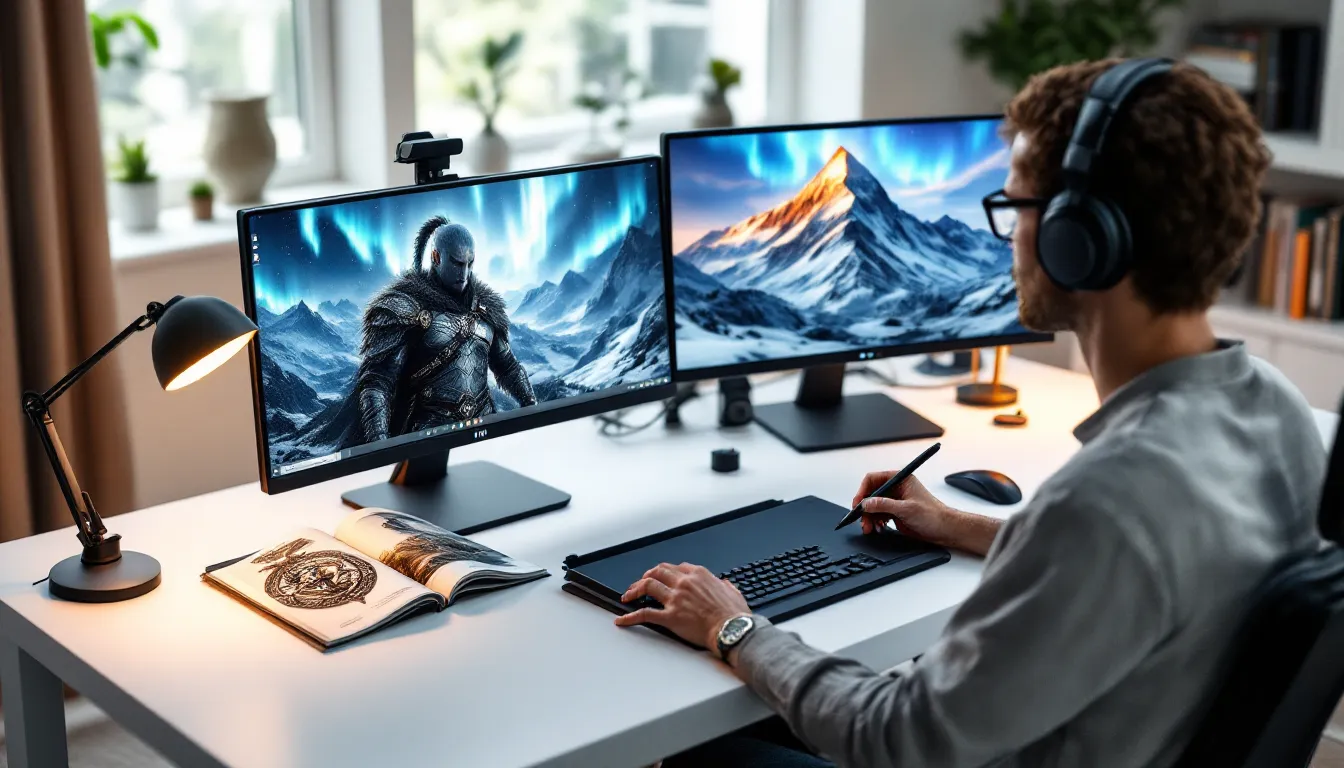
Hardware matters too. A drawing tablet transforms the experience, entry-level Wacom or XP-Pen tablets start under $100. Display tablets (where you draw directly on the screen) begin around $300 but aren’t necessary for beginners. Many successful artists use basic non-display tablets throughout their careers.
Capturing the Nordic Aesthetic and Atmospheric Details
Skyrim’s visual identity draws heavily from Viking Age Scandinavia, carved wood, knotwork patterns, and weathered stone dominate. Study real-world references: Norwegian stave churches, Norse mythology texts with illuminated manuscripts, and archaeological finds from the Viking era. The game’s artists at Bethesda did this assignments: your fanart should too.
Color palette discipline separates good Skyrim art from great. Avoid oversaturating colors, the game’s world trends toward desaturated earth tones with selective color pops (like the blue of frost magic or orange of fire). Snowstorms, fog, and overcast skies dominate the climate, creating natural diffusion that softens harsh lighting.
Weathering and age should appear everywhere. New-looking armor breaks immersion: scratches, dents, and wear marks tell stories. Stone ruins grow moss, wood cracks and grays, metal tarnishes. This environmental storytelling separates competent technical art from pieces that feel authentically Skyrim.
Reference Materials: Screenshots, Mods, and Concept Art
In-game screenshots provide your primary references. Tools like NVIDIA Ansel or ENB screenshot functions capture high-resolution images with depth-of-field effects and custom camera angles. Build a reference library organized by category: architecture, armor sets, landscapes, creature designs, and lighting conditions.
Modded references open creative possibilities. Visual overhauls like armor modifications add detail and variety to character designs, while ENB presets demonstrate advanced lighting techniques. Sites like Nexus Mods showcase thousands of visual enhancements that can inspire artistic direction even if you’re not using them in gameplay.
Official concept art from Bethesda’s art books (The Skyrim Library series and The Art of Skyrim) reveals the thought process behind iconic designs. Study how concept artists simplified complex forms for game-ready assets while maintaining visual interest. Their color keys and composition sketches teach fundamental techniques applicable to fanart.
Historical references ground your work in reality. Viking-era weapons, Nordic carved portals, and Scandinavian landscape photography inform authentic details. Mixing game references with real-world sources creates art that feels both faithful and elevated.
Advanced Techniques for Elevating Your Skyrim Art
Mastering Lighting and Atmosphere in Fantasy Scenes
Atmospheric perspective is non-negotiable for Skyrim landscapes. Objects fade to blue-gray as distance increases, mountains on the horizon should have significantly less contrast than foreground rocks. The game’s Nordic setting means frequent overcast conditions that create soft, directionless light rather than harsh shadows. Study how fog layers interact with terrain, creating bands of fading visibility.
Rim lighting makes characters pop against backgrounds. When your Dragonborn stands between the viewer and a light source (campfire, magical glow, setting sun), a bright edge along the silhouette creates depth and drama. This technique appears constantly in professional Skyrim art because it solves the fantasy artist’s eternal problem: making dark-armored characters visible against dark backgrounds.
Color temperature contrasts add visual interest. Pair cool moonlight with warm torchlight, or icy frost magic against fiery destruction spells. Skyrim’s magic system provides built-in color coding, restoration glows golden-yellow, destruction shifts between orange-red and electric-blue, illusion pulses purple. Using these established colors makes your art immediately recognizable to players.
Volumetric lighting (god rays) through fog, dust, or smoke creates that cinematic Skyrim feeling. Even subtle rays streaming through a dungeon’s crack or illuminating falling snow elevate atmospheric quality. Digital artists can achieve this with dodge/burn layers, custom brushes, or dedicated plugins depending on software.
Character Design Tips for Custom Dragonborn Portraits
Facial storytelling beats generic pretty faces. Add scars that suggest backstory, a diagonal slash across the eye from a sabre cat encounter, burn marks from a poorly-blocked fireball, or ritual scarification common to certain Nord clans. War paint should follow cultural logic: intimidating designs for warriors, symbolic patterns for mages, ritualistic marks for those who worship specific Divines.
Armor believability requires understanding weight distribution and articulation. Pauldrons connect to chest pieces, gauntlets extend under vambraces, and helms rest on padded coifs. Even fantasy armor follows physics, a massive Daedric pauldron needs visible strapping or magic to justify staying attached during combat. Including wear patterns where armor pieces rub together during movement adds realism.
Prop storytelling enriches character work. Don’t just draw a Dragonborn, show the Dragonborn who just cleared Bleak Falls Barrow with a tattered map, looted golden claw, and bandage over a fresh wound. Environmental details like snowflakes melting on warm armor or condensation breath in cold air root characters in Skyrim’s harsh climate.
Expression and posture convey personality. A heavy armor warrior stands differently than a light-footed archer: a confident mage holds themselves unlike a weary adventurer. Reference real body language: how people stand when exhausted, alert, confident, or defeated. Skyrim’s player character has no voiced dialogue, so visual characterization carries extra weight in fanart.
Adding Lore-Accurate Details That Fans Will Appreciate
Daedric symbolism rewards research. If your character worships Azura, include moon and star motifs. Mehrunes Dagon followers might bear runic tattoos matching his Oblivion plane’s aesthetic. Moonshadow imagery suits Meridia devotees. Deep-lore fans notice when artists get these details right, and it separates generic fantasy art from specifically Skyrim art.
Racial cultural details add authenticity. Nords favor practical, fur-lined gear reflecting their harsh homeland. Dark Elves incorporate House symbols and ash-covered aesthetic from Morrowind’s destruction. Khajiit wear moon-sugar iconography and favor loose, desert-appropriate clothing under armor. Argonians’ Hist connection might appear through scale patterns resembling tree bark or swamp vegetation.
Location-specific elements ground scenes in recognizable places. Including Dragonsreach’s distinctive arched beams, Whiterun’s Gildergreen tree, or Solitude’s stone arch entrance lets viewers instantly identify settings. For original locations, maintain architectural consistency, Nordic ruins use specific column shapes and knotwork patterns that differ from Imperial forts or Dwemer installations.
Magic effects accuracy shows attention to detail. Restoration magic manifests as golden-white particles, not green nature magic (that’s not really in vanilla Skyrim). Conjuration summons arrive with purple-black smoke. Soul Trap creates spiraling purple-white streams. Fans who’ve spent hundreds of hours watching these effects will immediately spot inaccuracies.
Sharing and Promoting Your Skyrim Fanart
Best Platforms for Maximum Visibility and Engagement
Twitter (X) moves fast but rewards consistent posting. The gaming art community thrives here with active retweeting and quote-tweeting culture. Post finished pieces during peak hours (evenings US/EU time zones overlap around 1-4 PM EST). Include progress shots or detail crops in thread format, artists who show their process get better engagement than single-image posts.
Instagram favors polished, finished work over sketches. The algorithm pushes Reels, so consider time-lapse videos of your painting process or before/after comparisons. Stories let you share WIPs (works-in-progress) without cluttering your main feed. Use all 30 available hashtags, generic (#art, #fantasy) and specific (#skyrimfanart, #dragonborn, #elderscrollsart).
ArtStation targets professional opportunities. If your goal includes freelance work or game industry jobs, maintaining an ArtStation portfolio is essential. The platform’s blog feature lets you write process breakdowns that demonstrate technical knowledge alongside finished art. Recruiters actively browse here.
Reddit engagement comes through community participation beyond self-promotion. Comment on others’ work in r/skyrim and r/ImaginaryTamriel before posting your own. The 10:1 rule (ten comments/engagements per self-promotion post) keeps you from getting flagged as spam. When you do post, choose weekday mornings when mods are active and the feed isn’t clogged with memes.
Using Hashtags and Communities to Reach Fellow Fans
Hashtag research matters more than random guessing. Search potential tags and check post frequency, #skyrimfanart has thousands of posts (good visibility), while #skyrimart101guide has five (useless). Mix popularity tiers: mega-tags (#videogames, #fantasy), medium (#elderscrolls, #bethesda), and niche (#khajiiart, #skyrimoc).
Community-specific tags connect with engaged audiences. #TESArtThursday or #SkyrimSaturday hashtag events aggregate art on specific days, increasing discoverability. Fan communities like #TeamSerana or #DarkBrotherhood attract viewers with strong character/faction preferences.
Cross-platform consistency builds recognizable branding. Use the same handle across Twitter, Instagram, Tumblr, and ArtStation when possible. Include links to your other profiles in bios, fans who find you on Reddit might prefer following on Twitter.
Discord servers for Skyrim fan communities offer direct feedback and collaboration opportunities. Servers like The Elder Scrolls Official Discord or Skyrim Mods Community have dedicated art channels. Sharing WIPs in Discord often generates valuable critique from fellow artists before you post finished work publicly.
Building a Portfolio and Growing Your Audience
Curate ruthlessly. Your portfolio should show your best 15-20 pieces, not everything you’ve ever drawn. Remove old work as you improve, having three stellar pieces beats having ten where seven are mediocre. First impressions matter: lead with your strongest work.
Consistent posting schedule trains the algorithm and your audience. Whether it’s twice weekly or twice monthly, regularity beats sporadic bursts. Batch-create during productive periods so you can maintain posting during creative dry spells.
Engage authentically with other artists. Genuine comments on work you admire build relationships and visibility. The Skyrim art community is relatively tight-knit, artists support each other through retweets, mentions, and collaboration. Networking feels less mercenary when you focus on making friends who share your interests.
Process content extends one finished piece into multiple posts. Share: initial sketches, line art, flat colors, lighting passes, detail shots, and final piece. This creates a week’s worth of content from a single artwork while teaching viewers about your techniques. Tutorial-style breakdowns position you as knowledgeable, attracting followers interested in improving their own skills.
Legal Considerations and Copyright for Fanart Creators
Understanding Fair Use and Bethesda’s Policies
Fair use is murkier with fanart than people assume. US copyright law’s fair use doctrine considers four factors: purpose, nature, amount, and market effect. Transformative works (adding original creative elements) fare better than straight reproductions. Non-commercial fanart sits in a gray area that most companies tolerate as free marketing.
Bethesda’s official stance toward fanart is relatively permissive compared to companies like Nintendo. They’ve never issued takedowns against non-commercial fan artists, and actively feature community art in official social media posts. The Creation Kit EULA explicitly allows for mods and derivative works within the modding framework.
That said, no formal license grants you rights to their IP. Bethesda could theoretically issue takedowns or cease-and-desist orders, though they haven’t shown interest in doing so against standard fanart. Their legal action historically targets commercial products falsely claiming association or using Bethesda trademarks deceptively.
Trademark issues arise with logos and specific names. Using the exact Skyrim dragon logo or official promotional imagery crosses lines that original character art doesn’t. Saying “inspired by Skyrim” in descriptions is safer than implying official endorsement.
Selling Fanart: What You Need to Know
Commercial fanart exists in legal limbo. Technically, selling art of copyrighted characters violates IP law. Realistically, most companies ignore small-scale operations because enforcement costs exceed losses. This doesn’t make it legal, just tolerated.
Convention artist alley sales and Etsy shops selling Skyrim prints operate in this gray zone. Many artists do it successfully for years without issue. But, you assume risk that Bethesda or Zenimax could demand takedowns or pursue legal action. Insurance comes from remaining small enough to fly under the radar.
Transformation increases safety. Selling a traced screenshot of Serana invites trouble: selling a stylized portrait you created using Serana as inspiration stands on firmer ground. Adding original elements, changing poses, and creating new compositions all strengthen fair use arguments.
Commission work for private buyers differs from mass-producing merchandise. Doing a one-off custom painting of someone’s Dragonborn character for personal use carries less risk than printing 500 posters. The private nature and lack of market competition makes enforcement unlikely.
Patreon and subscription models shift the monetization away from the fanart itself. Artists who post Skyrim work publicly while earning through Patreon support dodge direct sale issues. You’re technically selling access to your creative process and community, with fanart being a benefit rather than a product.
Merchandise licensing represents the legal path. Some fan artists approach companies with portfolio proposals for official licenses. Bethesda has partnered with artists through programs like the Creation Club. Landing official work is competitive but eliminates legal concerns while building professional credentials.
The Skyrim Fanart Community: Events, Challenges, and Collaborations
Participating in Art Challenges and Monthly Themes
Inktober and Drawtober adaptations appear every October with Skyrim-specific prompt lists. Artists interpret prompts like “Draugr,” “Thu’um,” or “Blackreach” in their preferred medium. Following the #SkyrimInktober tag reveals hundreds of daily pieces ranging from quick sketches to elaborate ink illustrations. Participating builds portfolio content while connecting with other artists working through the same challenge.
Montly theme challenges run year-round in Discord servers and subreddit communities. Common themes include “favorite companion,” “redesign a Daedric Prince,” or “your character in X armor set.” These focused prompts help artists overcome creative block while generating content audiences actively seek.
Anniversary events around Skyrim’s November 11 launch date see coordinated fan projects. The 10th anniversary in 2021 generated massive art waves: expect similar surges for milestone years. Gaming communities across platforms often run features spotlighting fan creations during these periods, offering visibility boosts.
Seasonal art capitalizes on holiday themes. A Dragonborn decorating a Gildergreen tree for New Life Festival, spooky vampire artwork for October, or summer landscape paintings all perform well when posted timely. The Skyrim setting accommodates most seasonal themes without feeling forced.
Collaborating with Other Artists and Creators
Art trades let artists swap commissions, you draw someone’s Khajiit ranger, they draw your Nord warrior. This builds relationships, exposes both audiences to new artists, and generates content without financial transaction. Organizing trades through Discord or Twitter DMs works smoothly when both parties agree on scope and deadlines.
Collaboration pieces where multiple artists contribute to one artwork create impressive final products. One artist might do line art while another handles colors, or multiple artists each draw different characters in a group scene. The technical challenge comes from matching art styles, but successful collaborations often go viral due to their uniqueness.
Artist zines compile thematic artwork from multiple contributors into digital or print anthologies. Skyrim-focused zines appear several times yearly, organized through Twitter calls for applications. Contributing places your work alongside established artists, cross-promotes to all participants’ audiences, and results in a professional portfolio piece.
Streamer/artist partnerships pair fanartists with Skyrim content creators on Twitch or YouTube. Providing artwork for channel branding, thumbnails, or stream overlays creates ongoing exposure to gaming audiences. Many streamers credit artists in descriptions with links, driving traffic to your portfolio. Some partnerships evolve into paid ongoing work.
Mod collaboration bridges art and game development. Texture artists, UI designers, and concept artists contribute to mods featured on Nexus Mods, with projects like Beyond Skyrim or Skywind needing constant art support. These volunteer opportunities build technical skills while contributing to major community projects.
Conclusion
Skyrim’s fanart ecosystem thrives fifteen years post-launch because the game creates personal stories worth immortalizing. Whether you’re collecting desktop wallpapers, commissioning your Dragonborn’s portrait, or picking up a stylus for the first time, the community welcomes all skill levels. The techniques covered here, from atmospheric lighting to lore-accurate symbolism, separate competent fanart from pieces that resonate with fellow players. Legal considerations exist, but the tolerated gray area has allowed thousands of artists to build portfolios and even careers around Bethesda’s world. As modding tools evolve and new players discover Skyrim through Anniversary Edition and beyond, fresh interpretations will continue flooding art platforms. The Dragonborn’s story may end after Alduin’s defeat, but the creative legacy shows zero signs of stopping.